
Determination of Nitrate and Nitrogen in surface water and agricultural applications
Nitrogen is a crucial nutrient that helps plants and crops grow, but high concentrations are harmful to people and nature. Pure, clean water is vital to human health and to natural ecosystems. Excess nitrogen from agricultural sources is one of the main causes of water pollution in Europe. Studies done by Wageningen University & Research in collaboration with Glastuinbouw Nederland, Acacia Water, Hoogheemraadschap Delfland, Fixeau B.V. and Stichting AKVO have proven the usability of the LAQUAtwin meter in this application.


Introduction
Nitrates and organic nitrogen compounds from fertilizer and manure enter groundwater through leaching and reach surface water through runoff from agricultural fields. A high level of nitrate makes water unsuitable as drinking water.
In rivers, lakes and marine waters, nitrogen and other nutrients, in particular phosphorus, stimulate the growth of algae. At moderate levels, algae serve as food for aquatic organisms, including fish. However, excessive nutrient concentration in water systems will cause algae to grow excessively. This affects the natural ecosystem and can lead to depletion of oxygen in the water. This phenomenon, known as eutrophication, has negative consequences for biodiversity, fisheries and recreational activities.
Both phosphorous and nitrogen play a role in eutrophication, but while the main cause of eutrophication in fresh water is phosphorus, it is mainly caused by nitrogen in marine water.
EU Directive
The maximum allowable nitrate concentration in surface water is 50mg/l (ppm) NO3- or 11,3 mg/l NO₃-N.
The EU Nitrates Directive (91/676/EEC) aims to protect water quality across Europe by preventing nitrates from agricultural sources that pollute ground and surface waters and by promoting the use of good farming practices.
The Directive aims to reduce water pollution caused by nitrates used in agriculture by
- monitoring nitrate of water bodies
- designating nitrate vulnerable zones
- establishing codes of good agricultural practices and measures to prevent and reduce water pollution from nitrates
Source: https://environment.ec.europa.eu/topics/water/nitrates_en
Method
Testing for nitrates in water can be done in the laboratory, online and in the field. The determine the source of potential nitrate pollution a field measurement is preferred.
There are several methods to measure nitrate in water in the field. These range from simple test kits to more advanced measurement equipment.
Some commonly used methods are:
Chemical Test Kits
- Based on colour change.
- Sample is mixed with reagents that convert into a coloured solution. The intensity of the colour is measured.
- Change is read using a colour scale or spectrophotometer.
- Advantages: Portable, relatively inexpensive, quick.
- Disadvantages: Less accurate
Spectrophotometry
- Measures absorption of light by the solution at specific wavelengths.
- Absorption is converted into a concentration using a calibration curve.
- Advantages: High accuracy.
- Disadvantages: Less suitable for field conditions, more expensive, less portable than other methods.
Ion-Selective Electrodes (ISE)
- Ion-selective electrodes respond specifically to nitrate, allowing a direct measurement of the concentration.
- Advantages: Fast, portable.
- Disadvantages: Requires calibration and maintenance.
Test Strips (Dipsticks)
- Dip into the water to measure.
- Colour changes based on the concentration, the colour is compared to a scale to read the concentration.
- Advantages: Very simple, fast, and inexpensive.
- Disadvantages: Less accurate and sensitive than other methods.
Portable UV-Vis Spectrometers
- Measure light absorption.
- Similar to lab-based meters but more compact and suitable for fieldwork.
- Advantages: Very accurate, suitable for detailed field measurements.
- Disadvantages: More expensive and less portable.
Each method has its own pros and cons depending on the situation, such as accuracy, cost, ease of use, and required equipment. For field measurements, simple kits or test strips are often the most practical, while ion-selective electrodes or spectrophotometry are recommended for more precise work.

Instruments
For measurement of nitrate (NO3-) and nitrate nitrogen (NO3-N) the HORIBA WQ300 series handheld and LAQUAtwin pocket meters can both be used. The HORIBA instruments use Ion Selective electrodes to measure the concentration.
In field test conditions, where both instruments were used there was a good correlation between the results of the two instruments.
Research
Recent research by Wageningen University and Research (www.wur.nl) has shown the usability of the LAQUAtwin NO3-11. WUR published the results in this report: https://research.wur.nl/en/publications/ontwikkeling-en-evaluatie-van-een-handzame-nitraatmeter-voor-drai
Citation from the abstract of the report: By 2027, greenhouse horticulture in the Netherlands must grow almost emission-free. Measuring surface water quality by growers themselves on and around their greenhouse could provide more insight into disasters. Measuring nitrates in surface water seems to be a good method to detect fertigation water in surface water due to leaks. Research has therefore been conducted into a nitrate meter that growers can easily use themselves.
Based on desired technical and practical specifications, handheld meters available on the market and prototypes from research have been assessed for, among other things, suitability, accuracy, ease of use and cost price. A practical evaluation was carried out at six greenhouse growers using the handheld meter found to be most suitable. The meter has been found to be handy, robust, and sufficiently reliable to detect increased concentrations of nitrate in surface water. The meter has a large measuring range, allowing measurements to be made in surface water as well as in nutrient solutions and drainage water.
To detect leaks, the surface water must be checked weekly. The accuracy of the meter is less than that of laboratory analyses, but the low purchase price and operational costs are such that the use of the hand meter is more economical as soon as more than one measurement is carried out per week.
Field test WQ300
In the Netherlands the WQ300, with nitrate ion sensor head and cartridge, was compared against brand “Y” in the lab and during field test by Hoogheemraadschap Delfland*.
|
HORIBA |
Brand Y |
|
|---|---|---|
|
Battery live |
400 hrs |
80 hrs |
|
Sensor technology |
digital |
analog |
|
Stores cal data when replacing batteries |
Yes |
No |
|
Field calibration |
Yes |
No |
|
Wireless data transfer |
Yes |
No |
NO₃⁻ or NO₃-N
The terms "nitrate (NO₃⁻)" and "nitrogen (NO₃-N)" both refer to forms of nitrogen, but they are used in different contexts, and there is a distinction between them:
Nitrate can be converted to nitrate nitrogen by dividing the NO - with 4,4268 and vice versa:
- 100 mg/L (ppm) NO3- = 22,58 NO₃-N mg/L (ppm) (100 / 4,4268).
- 22,58 mg/L (ppm) NO₃-N = 100 mg/L (ppm) NO3- (100 x 4,4268).
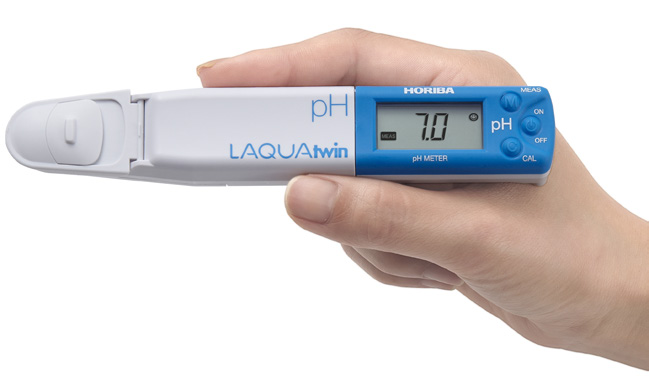
LAQUAtwin: the only meters with flat sensor technology.
HORIBA’s highly-sensitive, flat sensor technology opens up new possibilities for sampling and sample types. Only a small amount of sample is required, so you can easily sample in situ without the need for beakers or other labware. Sensors are easily replaced as required.
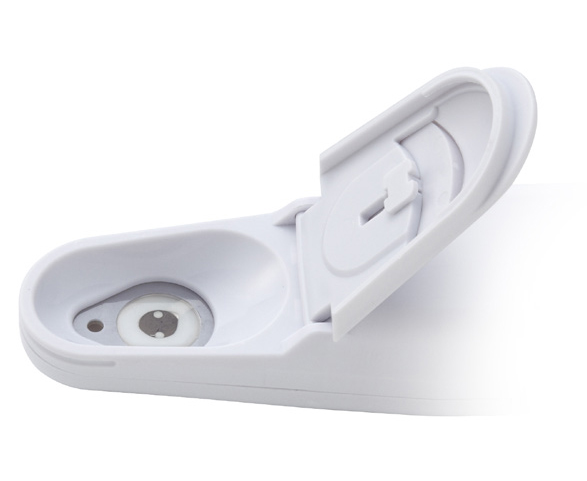
Calibrate and measure at the touch of a button — the smiley face will tell you when the result can be read.
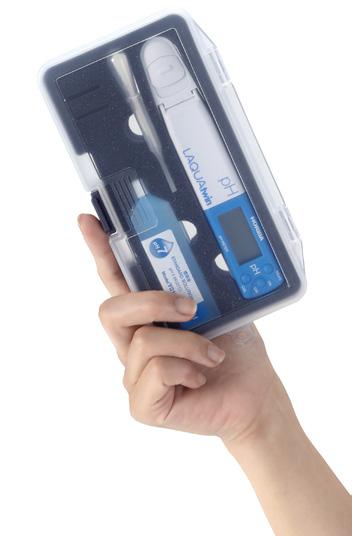
LAQUAtwin is fully waterproof and dustproof.
The meter and sensor are fully waterproof* and dustproof, so you can take it anywhere.
* IP67 rated. Will withstand immersion for 30 minutes at 1 m. Not suitable for underwater use.
Carry case comes as standard for handy portability.
The compact carry case contains everything you need for your measurements, including the standard solution and sampling sheets.
Matching products

Horiba LAQUAtwin Nitrate Ion Tester NO3-11 for Precise On-Site Measurements Handheld tester with 2-point calibration, ideal for water and environmental measurements The Horiba LAQUAtwin Nitrate Ion Tester (NO3-11) is a portable device for direct determination of nitrate ions (NO3) and temperature in liquids and samples. Thanks to the ion-selective electrode and compact design, the tester delivers fast and reliable results. The integrated temperature unit enables temperature-compensated analysis and clearly displays both nitrate and temperature values on the digital LCD display. Mobile Nitrate Ion Tester for Precise On-Site Analyses The integrated temperature measurement enables temperature-compensated analysis and shows both nitrate and temperature values. Only very small sample volumes are required, minimizing sample consumption and increasing efficiency in daily use. The tester can be set up with up to two calibration points, with features such as automatic standard recognition, adjustable calibration values, and multiplication compensation for flexibility. Only minimal sample volumes are needed for each analysis, reducing sample usage and improving efficiency. Why Nitrate Measurement Is Crucial – and a Pocket Tester from Horiba Is Ideal Nitrate measurement plays a central role in agriculture, water management, and environmental monitoring. Elevated nitrate concentrations can affect drinking water quality, stress ecosystems, and contribute to over-fertilization. At the same time, nitrate is an essential nutrient for plants, and targeted control is vital for sustainable agriculture. A mobile nitrate pocket tester enables rapid on-site analysis without time-consuming laboratory tests. This allows early detection of contamination, immediate action, and reliable monitoring of legal limits. The Horiba LAQUAtwin NO3-11 combines this flexibility with high measurement accuracy and easy operation – ideal for routine checks and scientific applications. The tester can be configured with up to two calibration points. Features like automatic standard recognition, adjustable calibration values, and multiplication compensation provide high adaptability to different sample types and measurement conditions. Typical Applications of the Horiba LAQUAtwin Nitrate Ion Tester (NO3-11) Agriculture: To optimize fertilizer use, promote plant growth, and minimize environmental impact, farmers and agronomists use the tester to monitor nitrate levels in soils and irrigation water. Water Quality Management: To maintain nitrate concentrations within safe limits, the NO3-11 is used in water management to check drinking and wastewater quality. Environmental Monitoring: The NO3-11 allows environmental technicians and scientists to quickly analyze nitrate contamination in rivers, lakes, and groundwater, ensuring compliance with environmental standards and identifying pollution sources. Research and Development: The tester is used by scientists in environmental science, hydrology, and soil science to conduct detailed studies of the nitrogen cycle and the effects of nitrates on ecosystems. Additional information We would like to inform you of an upcoming product update for the LAQUAtwin handheld analysers. To enhance product safety and prevent infants and young children from accidentally swallowing the batteries, HORIBA will be introducing a new battery cover on all LAQUAtwin pocket-sized analysers. Overview of the product change Change: Battery cover for enhanced safety. Reason: To prevent accidental swallowing of batteries. Production date: From January 2026 in Japan As this change is currently being rolled out, mixed deliveries of the current and updated versions may occur during the transition period. Note on Scope of Delivery: From November 2026, HORIBA products will be supplied without batteries. Existing stock may still include batteries. Batteries are no longer included with newly manufactured products and must be purchased separately if required. Frequently asked questions How long is the warranty period for HORIBA pocket testers? The warranty period is two years from delivery for commercial customers. How many measurements can be taken before the sensor needs to be replaced? This varies depending on the application, use and storage of the Horiba tester. As a rule, the sensor should be replaced after one year. How long is the warranty period for replacement sensors for pocket testers? The warranty period is 12 months after delivery for commercial customers. How do you clean the pocket tester? The pocket tester can be rinsed under water. We recommend cleaning with DI water (deionised). Tissue paper is recommended for drying after cleaning. How can the pocket tester be reset to factory settings? (e.g. in the event of an incorrect measurement result) This information can be found in the operating instructions. These can be found in the download area of the shop and on the product. Is calibration necessary before each measurement? Basically, yes. Further information can be found in the operating instructions.
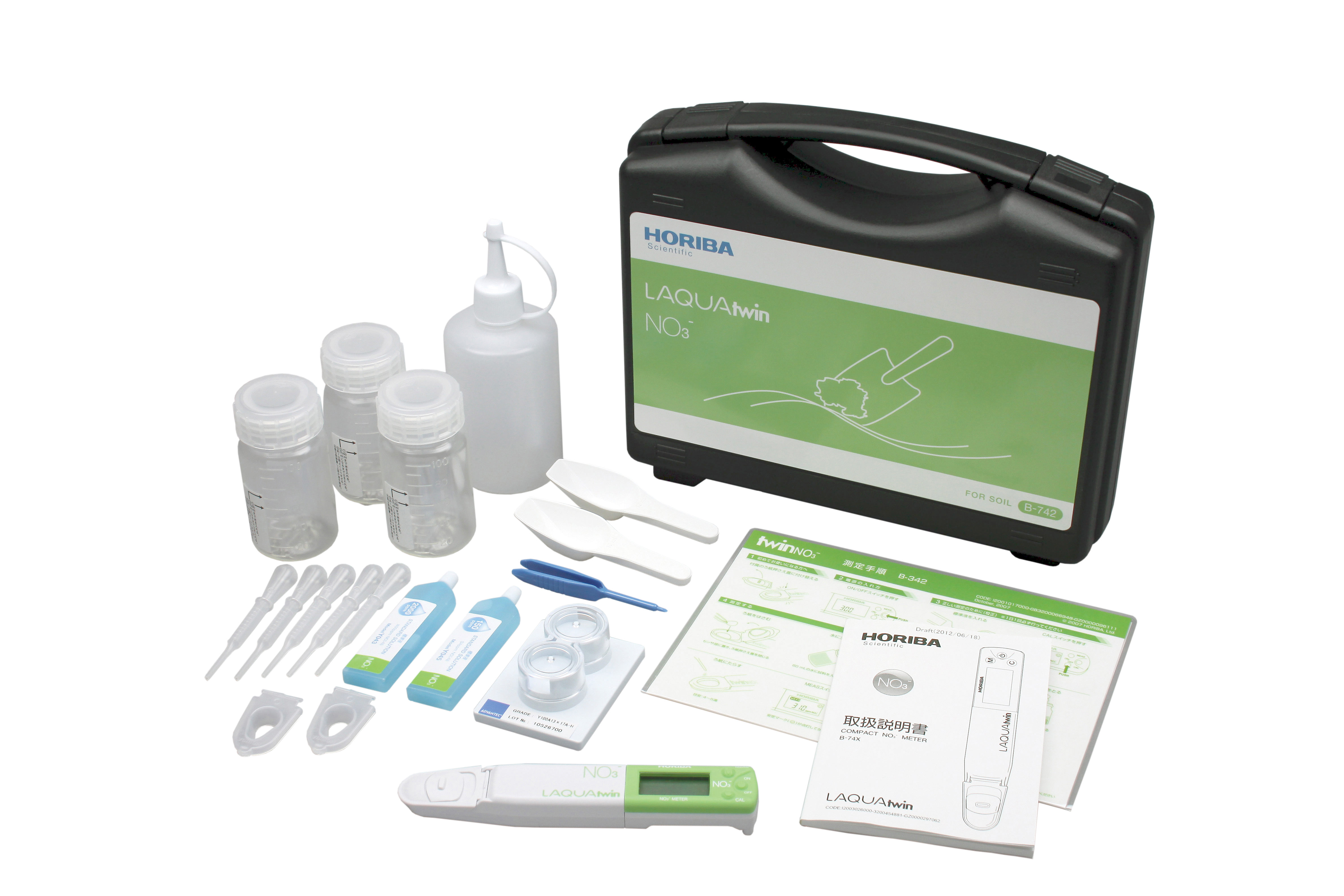
The LAQUAtwin Nitrate Ion Handheld Tester (NO3-11C) included in the analysis kit is pre-set by the factory to the relevant calibration points 30PPM and 300PPM for soil analysis. Manufacturer Part No. 3200689164 | B-742 Additional information We would like to inform you of an upcoming product update for the LAQUAtwin handheld analysers. To enhance product safety and prevent infants and young children from accidentally swallowing the batteries, HORIBA will be introducing a new battery cover on all LAQUAtwin pocket-sized analysers. Overview of the product change Change: Battery cover for enhanced safety. Reason: To prevent accidental swallowing of batteries. Production date: From January 2026 in Japan As this change is currently being rolled out, mixed deliveries of the current and updated versions may occur during the transition period. Note on Scope of Delivery: From November 2026, HORIBA products will be supplied without batteries. Existing stock may still include batteries. Batteries are no longer included with newly manufactured products and must be purchased separately if required.

Precise Nitrate Tester for Plants – Mobile NO₃⁻ Analysis On-Site Horiba Nitrate Ion Pocket Tester Kit for fast and accurate on-site results The Horiba LAQUAtwin Nitrate Ion Hand Tester (NO3-11C) in its practical analysis kit is your mobile laboratory for reliable determination of nitrate ions and temperature in plant sap samples. With a wide measurement range of 6 to 9900 ppm NO₃⁻ and automatic temperature compensation, the device provides fast and accurate results. The ion-selective electrode ensures precise NO₃⁻ measurements, while the digital backlit display allows quick and easy reading of values. Mobile nitrate analysis kit for plants, water, and environmental monitoring The kit contains the handheld tester, five pipettes, three measuring cups, a plant sample press, standard solutions, and sampling sheets. This setup allows for rapid and reproducible analysis of plant sap without the need for additional laboratory equipment. The device is dust- and waterproof, features automatic standard recognition, Auto-Stabil and Auto-Hold functions, and has a long battery life, making it ideal for mobile use in the field, greenhouse, or laboratory. Why nitrate measurement in plants is important – and why a mobile kit is ideal Nitrate content in plants is a key indicator of nutrient supply, plant growth, and agricultural product quality. Excessively high or low nitrate levels can negatively impact yield, plant quality, and environmental compatibility. A mobile nitrate hand tester allows direct analysis of plant sap on-site, without time-consuming laboratory procedures. Fertilization and irrigation measures can be precisely adjusted, and over- or under-supply can be detected early. The Horiba LAQUAtwin NO3-11C provides a precise, fast, and practical solution for this purpose. Typical applications for the Horiba Nitrate Analysis Kit Aquaculture and coral monitoring Aquaristics Horticulture Beverage and food production Laboratories and schools Environmental monitoring Water treatment Water conditioning Additional information We would like to inform you of an upcoming product update for the LAQUAtwin handheld analysers. To enhance product safety and prevent infants and young children from accidentally swallowing the batteries, HORIBA will be introducing a new battery cover on all LAQUAtwin pocket-sized analysers. Overview of the product change Change: Battery cover for enhanced safety. Reason: To prevent accidental swallowing of batteries. Production date: From January 2026 in Japan As this change is currently being rolled out, mixed deliveries of the current and updated versions may occur during the transition period. Note on Scope of Delivery: From November 2026, HORIBA products will be supplied without batteries. Existing stock may still include batteries. Batteries are no longer included with newly manufactured products and must be purchased separately if required. Frequently asked questions How long is the warranty period for HORIBA pocket testers? The warranty period is two years from delivery for commercial customers. How many measurements can be taken before the sensor needs to be replaced? This varies depending on the application, use and storage of the Horiba tester. As a rule, the sensor should be replaced after one year. How long is the warranty period for replacement sensors for pocket testers? The warranty period is 12 months after delivery for commercial customers. How do you clean the pocket tester? The pocket tester can be rinsed under water. We recommend cleaning with DI water (deionised). Tissue paper is recommended for drying after cleaning. How can the pocket tester be reset to factory settings? (e.g. in the event of an incorrect measurement result) This information can be found in the operating instructions. These can be found in the download area of the shop and on the product. Is calibration necessary before each measurement? Basically, yes. Further information can be found in the operating instructions.

Thank you for your interest in our smart and individually configurable measuring instruments of the HORIBA LAQUA WQ-300 series. The high-quality digital multi-parameter handheld meters feature a large colour LCD display with LED backlight (7 cm x 5.2 cm), making them ideally suited for field use under a wide range of conditions and in direct daylight. Use our configurator to select the appropriate measuring instrument from the HORIBA WQ-300 series with 1 to 3 measuring channels, the desired measuring parameters (sensor cartridges) and the required cable length according to your individual needs. The sensor cables feature an integrated sensor receptacle and digital module. Additional measuring parameters can also be connected at a later stage using the corresponding sensor cable or carried in the measuring case as supplementary equipment. As with other HORIBA handheld meters, the devices are particularly resistant to shocks, slipping and scratches thanks to their special rubber coating. Operation requires four standard AA batteries with 2500 mAh. For greater flexibility during mobile use, the WQ-300 series can alternatively be powered by a power bank or battery pack via the integrated USB interface. An IP67 certification, which confirms dust-tightness and protection against temporary immersion for up to 30 minutes at a water depth of one metre, completes the professional overall package alongside the ergonomic design and easy operation. HORIBA offers a three-year warranty on the handheld measuring instruments of the LAQUA WQ-300 series. Functions and Features During measurements, users are supported by operating instructions displayed in the form of smiley symbols. These are complemented by an LED status indicator on the sensor to help prevent operating errors and implausible measurement results. The small number of control buttons and the absence of complex, nested menus ensure that the instruments remain easy and safe to operate, even when used intermittently or by different users. Additional Functions Electrode wear indicator Measurement stability indicator on the instrument and sensor Hold function to "save" the current measured value on the display Individual measuring point identification with up to 8 characters Automatic calibration functions Integrated sensor holders Self-diagnostic function GLP functions Fold-out stand for convenient hands-free measurements Transfer of measurement data to a computer or smartphone via USB or WiFi Measuring Case for Mobile Use All handheld meters of the WQ-300 series are supplied in a reinforced measuring case for mobile outdoor use. The case provides space for the measuring instrument, electrodes and cables, as well as up to eight 60 ml bottles of buffer solutions. An integrated holder for buffer solution bottles facilitates calibration. Automatic Sensor Recognition A particular advantage of the WQ-300 series is automatic sensor recognition through sensor cables with integrated digital sensor receptacles. Information about the sensor, calibration data and measurement settings is stored in the digital sensor module and transmitted to the measuring instrument. In addition, all connected sensors can be calibrated simultaneously, as each sensor module independently stores measurement and calibration data and transmits them to the WQ-300 series measuring instrument. Analogue sensors can optionally be connected using the HORIBA BNC sensor adapter. Please contact us for further information. Available Languages German English French Spanish Portuguese Chinese Scope of Delivery WQ-300 series handheld meter in a carrying case Selected digital electrode, if applicable, and the corresponding sensor-specific cable with integrated digital sensor receptacle Instruction manual Manufacturer Article Number WQ-310-K (1 channel): 3200832605 Calibrating the Instrument pH Measurement To obtain accurate results, a two-point calibration must be carried out. The following buffer solutions are recommended: pH 7.00 and 4.01 for acidic samples pH 7.00 and 10.01 for alkaline samples If the expected pH value of the sample is unknown, a three-point calibration using pH 7.00, 4.01 and 10.01 is recommended. It is recommended to begin calibration with pH 7.00. Conductivity Measurement For conductivity measurements, a single-point calibration is sufficient, for example at 1413 µS/cm. For greater accuracy, a multi-point calibration can also be performed. Important Note on the Chloride Sensor Note: If a chloride sensor is selected, it is supplied without chloride ionic strength adjuster and chloride electrode filling solution. These solutions must be purchased separately by the customer. The chloride sensor cannot be used without the required filling solution. Why We Use These Measuring Devices in Water Treatment Precise calcium control is an important element of efficient water treatment, from drinking water purification and process water management to environmental analysis. Elevated calcium concentrations can contribute to scale formation, pipe damage, increased energy consumption and disruptions in chemical processes. For these applications, we offer configurable solutions from the HORIBA LAQUA WQ series in our online shop. Available Measuring Instruments WQ310-K: Single-channel solution for targeted measurements. WQ320-K: Simultaneous measurement of two parameters, such as calcium and conductivity. WQ330-K: Three-channel measurement for complex multi-parameter analyses. Benefits for Water Treatment Reliable measurement data for monitoring and optimising water treatment systems. Digital evaluation, documented measurement results and interfaces for data transfer. Robust design and practical measuring case for mobile on-site use. Flexible combination of calcium measurements with other parameters such as pH, conductivity or redox potential. Note on Scope of Delivery: From November 2026, HORIBA products will be supplied without batteries. Existing stock may still include batteries. Batteries are no longer included with newly manufactured products and must be purchased separately if required.

Thank you for your interest in our smart and individually configurable measuring instruments of the HORIBA LAQUA WQ-300 series. The high-quality digital multi-parameter handheld meters feature a large colour LCD display with LED backlight (7 cm x 5.2 cm), making them ideally suited for field use under a wide range of conditions and in direct daylight. Use our configurator to select the appropriate measuring instrument from the HORIBA WQ-300 series with 1 to 3 measuring channels, the desired measuring parameters (sensor cartridges) and the required cable length according to your individual needs. The sensor cables feature an integrated sensor receptacle and digital module. Additional measuring parameters can also be connected at a later stage using the corresponding sensor cable or carried in the measuring case as supplementary equipment. As with other HORIBA handheld meters, the devices are particularly resistant to shocks, slipping and scratches thanks to their special rubber coating. Operation requires four standard AA batteries with 2500 mAh. For greater flexibility during mobile use, the WQ-300 series can alternatively be powered by a power bank or battery pack via the integrated USB interface. An IP67 certification, which confirms dust-tightness and protection against temporary immersion for up to 30 minutes at a water depth of one metre, completes the professional overall package alongside the ergonomic design and easy operation. HORIBA offers a three-year warranty on the handheld measuring instruments of the LAQUA WQ-300 series. Functions and Features During measurements, users are supported by operating instructions displayed in the form of smiley symbols. These are complemented by an LED status indicator on the sensor to help prevent operating errors and implausible measurement results. The small number of control buttons and the absence of complex, nested menus ensure that the instruments remain easy and safe to operate, even when used intermittently or by different users. Additional Functions Electrode wear indicator Measurement stability indicator on the instrument and sensor Hold function to "save" the current measured value on the display Individual measuring point identification with up to 8 characters Automatic calibration functions Integrated sensor holders Self-diagnostic function GLP functions Fold-out stand for convenient hands-free measurements Transfer of measurement data to a computer or smartphone via USB or WiFi Measuring Case for Mobile Use All handheld meters of the WQ-300 series are supplied in a reinforced measuring case for mobile outdoor use. The case provides space for the measuring instrument, electrodes and cables, as well as up to eight 60 ml bottles of buffer solutions. An integrated holder for buffer solution bottles facilitates calibration. Automatic Sensor Recognition A particular advantage of the WQ-300 series is automatic sensor recognition through sensor cables with integrated digital sensor receptacles. Information about the sensor, calibration data and measurement settings is stored in the digital sensor module and transmitted to the measuring instrument. In addition, all connected sensors can be calibrated simultaneously, as each sensor module independently stores measurement and calibration data and transmits them to the WQ-300 series measuring instrument. Analogue sensors can optionally be connected using the HORIBA BNC sensor adapter. Please contact us for further information. Available Languages German English French Spanish Portuguese Chinese Scope of Delivery WQ-300 series handheld meter in a carrying case Selected digital electrode, if applicable, and the corresponding sensor-specific cable with integrated digital sensor receptacle Instruction manual Manufacturer Article Number WQ-320-K (2 channels): 3200832606 Calibrating the Instrument pH Measurement To obtain accurate results, a two-point calibration must be carried out. The following buffer solutions are recommended: pH 7.00 and 4.01 for acidic samples pH 7.00 and 10.01 for alkaline samples If the expected pH value of the sample is unknown, a three-point calibration using pH 7.00, 4.01 and 10.01 is recommended. It is recommended to begin calibration with pH 7.00. Conductivity Measurement For conductivity measurements, a single-point calibration is sufficient, for example at 1413 µS/cm. For greater accuracy, a multi-point calibration can also be performed. Important Note on the Chloride Sensor Note: If a chloride sensor is selected, it is supplied without chloride ionic strength adjuster and chloride electrode filling solution. These solutions must be purchased separately by the customer. The chloride sensor cannot be used without the required filling solution. Note on Scope of Delivery: From November 2026, HORIBA products will be supplied without batteries. Existing stock may still include batteries. Batteries are no longer included with newly manufactured products and must be purchased separately if required.

Horiba WQ330-K – Your Professional 3-Channel Water Quality Meter Expandable multi-parameter system for simultaneous measurement of pH, conductivity, redox, and other water parameters The Horiba LAQUA WQ330-K is a powerful multi-channel device for advanced water analysis, both on-site and in the laboratory. With three freely configurable measurement channels, it can simultaneously record parameters such as pH, conductivity, redox potential, TDS, temperature, oxygen, ammonia, calcium, chloride, nitrate, fluoride, and potassium. Intuitive operation, automatic sensor recognition, and digital calibration ensure accurate, fast, and reproducible measurements. Flexible Multi-Parameter System for Field and Laboratory Applications The analysis kit with the Horiba WQ330-K is ideal for environmental and water body monitoring, research and teaching, as well as drinking and process water control. The large LCD display with LED backlight ensures excellent readability even in direct sunlight. Measurement data can be exported and documented via USB or wirelessly, greatly simplifying traceability and analysis. The modular system allows the device to be quickly and precisely adapted to any measurement task. It is ideal for users who need to efficiently and reliably monitor multiple water parameters. Technical Features and Key Advantages of the WQ330-K The three measurement channels of the Horiba WQ330-K enable simultaneous recording of different water parameters, reducing measurement time and allowing better evaluation of relationships between parameters. The modular sensor concept allows flexible use of digital sensors, which are automatically recognized and store their calibration history. Notably, the combination of high measurement precision, user-friendliness, and mobility makes this device stand out. Quick deployment without complicated setup, along with easy data transfer for documentation and analysis, makes the Horiba LAQUA WQ330-K an ideal solution for professional water analytics. Calibrating the instrument: pH measurement To obtain accurate results, a two-point calibration must be carried out. It is recommended that the following solutions be used: pH 7.00 and 4.01 for acidic samples pH 7.00 and 10.01 for alkaline samples Carry out a three-point calibration using pH 7.00, 4.01 and 10.01 if you do not know the expected pH value of the sample. It is recommended that you calibrate using pH 7.00 first. Conductivity measurement For a conductivity measurement, a single-point calibration is sufficient, for example at 1413 μS/cm. For greater accuracy, a multi-point calibration can also be carried out. Note: During the promotional period, the discount on accessories will be automatically deducted at the shop’s checkout when purchased together with the HORIBA WQ330 device. Note on Scope of Delivery: From November 2026, HORIBA products will be supplied without batteries. Existing stock may still include batteries. Batteries are no longer included with newly manufactured products and must be purchased separately if required. Frequently asked questions How long is the warranty period for HORIBA analysers? The warranty period is 2 years for the 300 (WQ) series and 1 year for the F series after delivery. Where can I find suitable replacement electrodes or buffer solutions? You can find the appropriate replacement electrodes and buffer solutions in the shop under the main item at the bottom of the cross-selling section. How do I clean the probe before calibration? The sensors should be cleaned with DI water (deionised). After cleaning, wipe them with tissue paper if possible. Frequently asked questions about the promotion How long does the promotion run for? The promotion runs from 1 September 2026 to 31 December 2026. How do I get the discount on the accessories? The discount will be automatically deducted at the shop’s checkout when you purchase the HORIBA WQ330 unit at the same time.
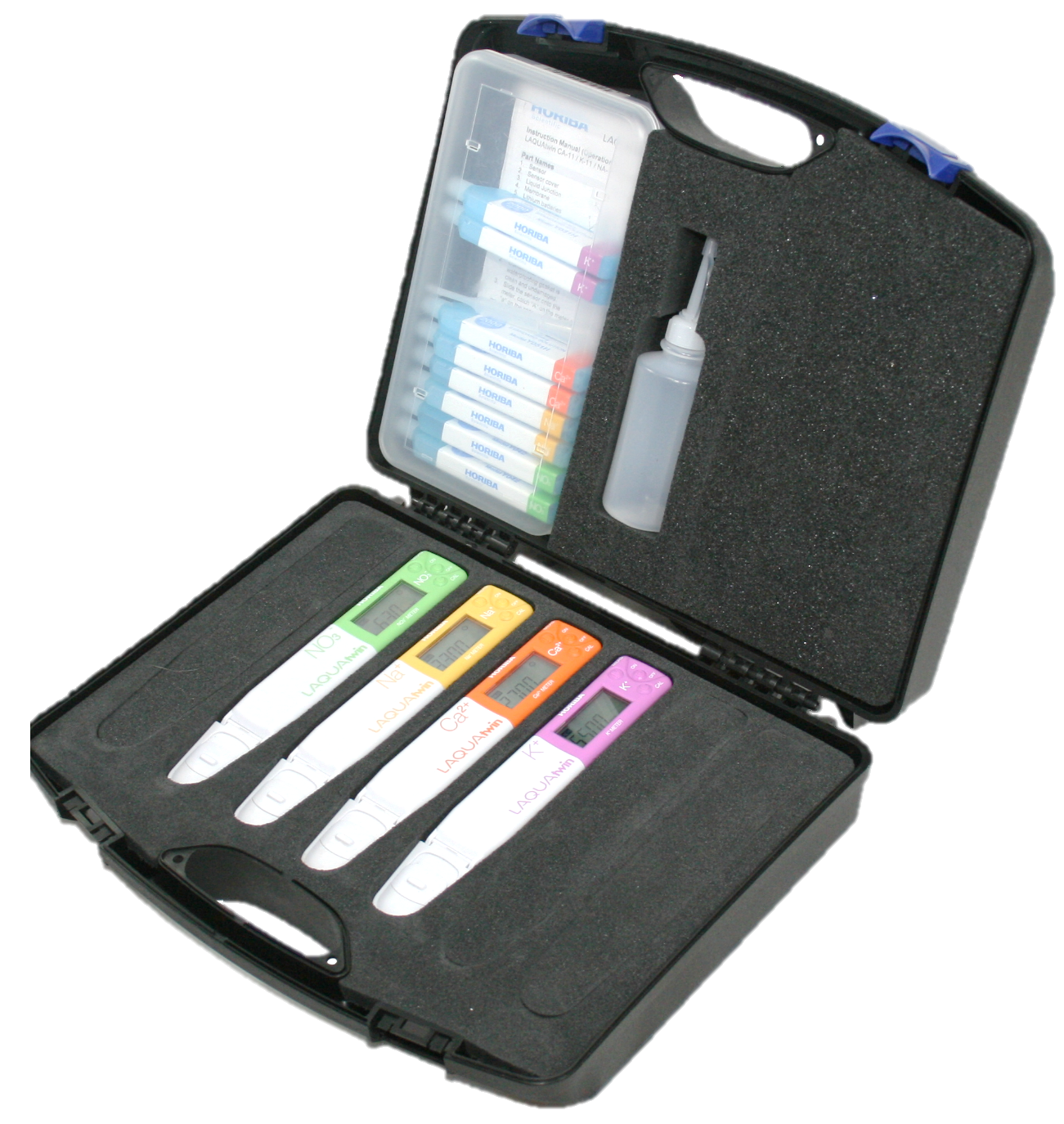
Mobile Analysis Laboratory for Ion Measurements – Versatile Use Compact kit for simultaneous determination of multiple water and environmental parameters The Horiba 4M LAQUAtwin Kit is a mobile laboratory that allows you to determine important ion parameters directly on-site. The case contains pocket testers for measuring sodium, potassium, nitrate, and calcium, as well as for temperature measurement. Each device uses ion-selective electrodes for targeted analysis of small samples and provides fast, reliable results. In addition to the four measurement devices, the kit includes calibration solutions and a wash/spray bottle for sensor cleaning. The sensors can be stored dry without special storage solutions. Compact Multi-Parameter Kit for Flexible On-Site Analyses The set is designed for measurement tasks where multiple ions need to be detected simultaneously, for example when monitoring drinking and process water, performing environmental checks of water bodies, conducting aquaculture analyses, or agricultural research. Thanks to the case, all essential testers including accessories are always on hand and ready for immediate use. The measurement results are available in a short time and are reliable and reproducible – ideal for routine and control measurements in the field. All components are neatly arranged in the case and ready for use at any time. An additional advantage is that the sensors can be stored dry without special storage solutions. Due to its compact design, the kit is particularly suitable for mobile applications where multiple ion parameters need to be determined quickly one after the other or in parallel. Why Multi-Parameter Ion Measurements Are Useful – and a Mobile Kit Is Ideal In many applications, not just a single measurement is important, but the interaction of multiple ion parameters. Sodium, potassium, nitrate, and calcium together influence water quality, biological processes, plant growth, and technical operations. Single measurements in a laboratory are often time-consuming and inflexible. A mobile analysis kit allows simultaneous detection of multiple parameters directly on-site. This allows relationships to be recognized more quickly, decisions to be made more reliably, and measurement campaigns to be carried out more efficiently. The Horiba 4M LAQUAtwin Kit combines these advantages in a compact, user-friendly system. Additional information We would like to inform you of an upcoming product update for the LAQUAtwin handheld analysers. To enhance product safety and prevent infants and young children from accidentally swallowing the batteries, HORIBA will be introducing a new battery cover on all LAQUAtwin pocket-sized analysers. Overview of the product change Change: Battery cover for enhanced safety. Reason: To prevent accidental swallowing of batteries. Production date: From January 2026 in Japan As this change is currently being rolled out, mixed deliveries of the current and updated versions may occur during the transition period. Note on Scope of Delivery: From November 2026, HORIBA products will be supplied without batteries. Existing stock may still include batteries. Batteries are no longer included with newly manufactured products and must be purchased separately if required. Frequently asked questions How long is the warranty period for HORIBA pocket testers? The warranty period is two years from delivery for commercial customers. How many measurements can be taken before the sensor needs to be replaced? This varies depending on the application, use and storage of the Horiba tester. As a rule, the sensor should be replaced after one year. How long is the warranty period for replacement sensors for pocket testers? The warranty period is 12 months after delivery for commercial customers. How do you clean the pocket tester? The pocket tester can be rinsed under water. We recommend cleaning with DI water (deionised). Tissue paper is recommended for drying after cleaning. How can the pocket tester be reset to factory settings? (e.g. in the event of an incorrect measurement result) This information can be found in the operating instructions. These can be found in the download area of the shop and on the product. Is calibration necessary before each measurement? Basically, yes. Further information can be found in the operating instructions.