
Conductivity measurement to differentiate between honey varieties
Why can beekeepers distinguish between blossom honey (made from flower nectar) and forest honey (made from honeydew) and even define varietal honeys such as acacia honey, lime honey or fir honey? This is because of the way bees behave. Bees are localised and plant species-loyal, so they mainly collect from the plants in their immediate vicinity. The origin of a honey can be characterised by its conductivity, among other things.




Introduction
The electrical conductivity of honey is limited to a value of less than 0.8 mS/cm according to the guidelines for honey when 20 g of honey solids are diluted in 100 ml of demineralised water.
This value is influenced by the following factors:
- Origin
- acid content
- Salt content Moisture
- Viscosity
Honey obtained from honeydew has a higher conductivity compared to flower honey. The conductivity of such a model honey solution can be determined using a conductivity meter.
To predict these measurements, a simple chemical approach is used based on the known properties of sugar and acid constants, ionic conductivity or estimated ionic mobility and viscosity of the solution. Both theoretical calculations and observed phenomena show that the maximum electrical conductivity is at a solids content of about 30%. At higher solid concentrations, which leads to a higher viscosity, the conductivity decreases significantly. By adjusting for the pH of the acid and taking viscosity into account, a good agreement between the predicted and measured conductivity was achieved. These results show that salt content and viscosity are the main factors influencing the electrical conductivity of honey, while acidity has a minor influence and dissociation of sugars is insignificant.
Method
For the measurement, 20 grams of honey are dissolved in 100 millilitres of demineralised water. It is important to note that this method is an approximation. To obtain more accurate results, the percentage of dry matter and the water content must be known. Nevertheless, with fixed ratios of quantity and volume of honey and water, this method provides quite reliable values and is recognised as a quick test. It is difficult to measure honey directly as the high viscosity impedes the flow of ions so much that a meter will consistently show a conductivity value of 0 mS/cm.
As well as differentiating between different types of honey, conductivity can also be used to determine the total solids content of honey, which would normally have to be determined by combustion. This shows how a simple quick test with a precise and reliable measuring device can avoid or at least reduce the need for time-consuming analyses.


Matching products

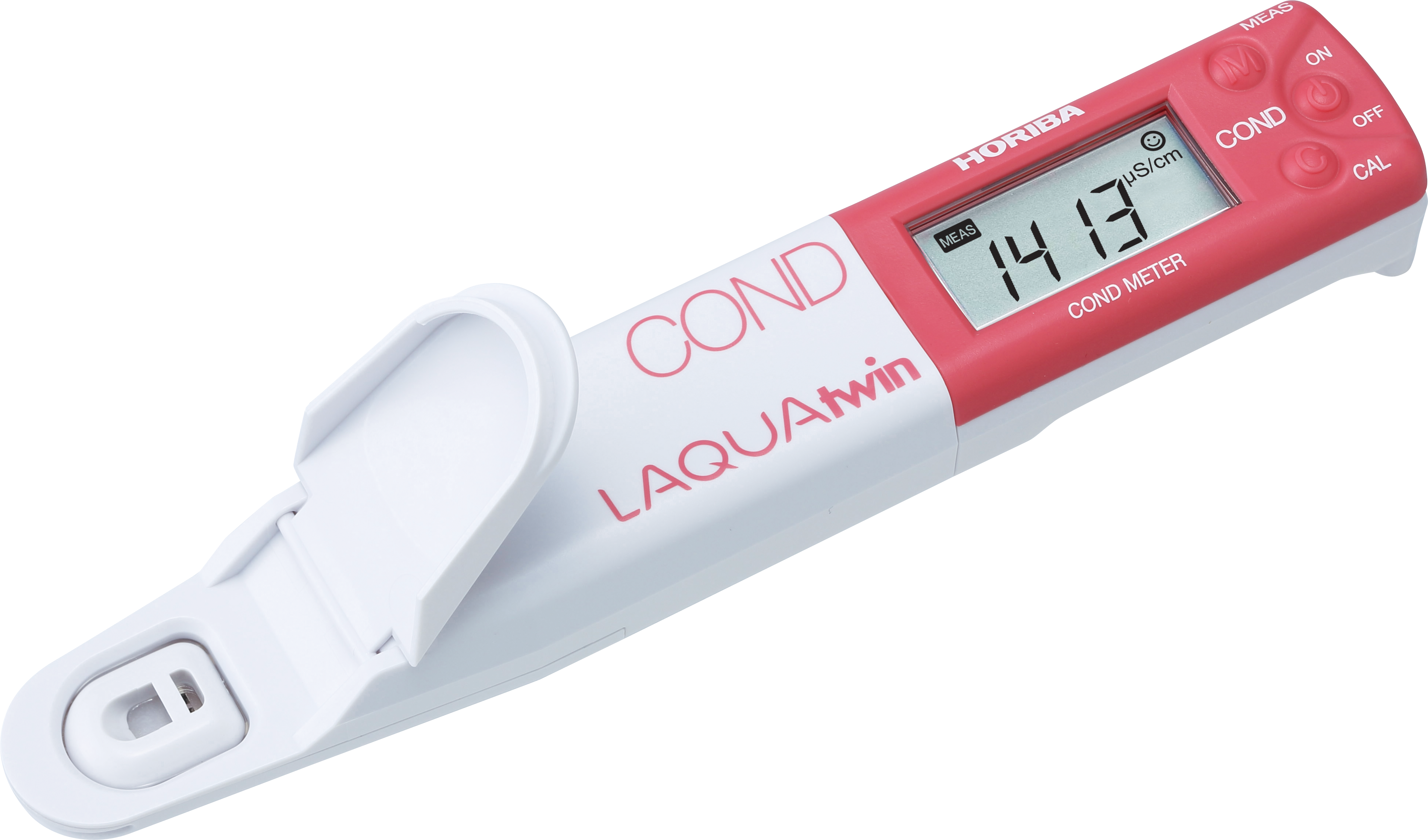
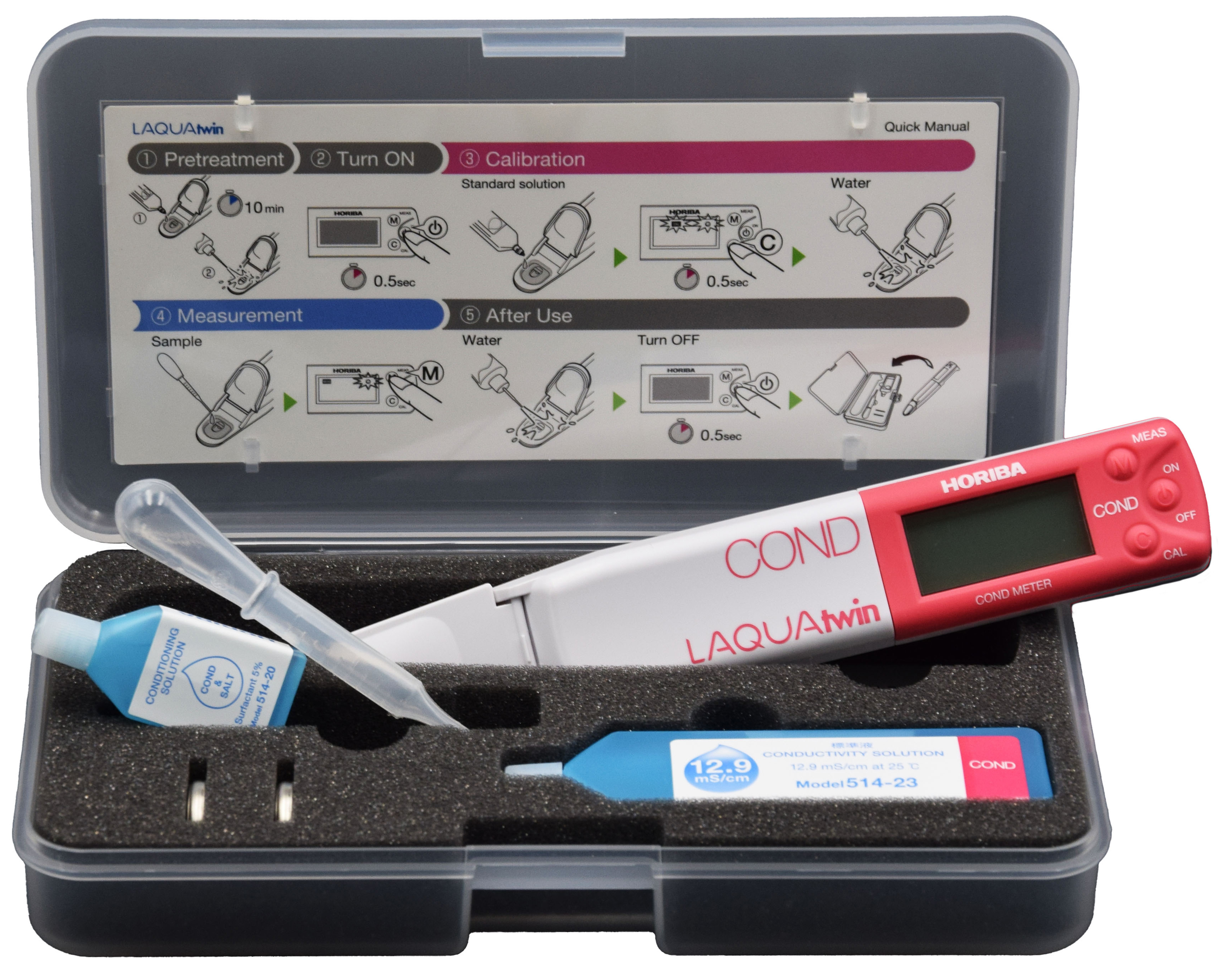
Find out more about the accuracy of HORIBA’s pocket conductivity testers: your ideal choice for precise conductivity measurements. The EC-11, EC-22 and EC-33 models, manufactured in Japan, represent the pinnacle of quality in pocket testers. They offer numerous benefits for users in laboratories, industry, aquaculture, water treatment, schools and universities, as well as amateur gardeners. An overview of the HORIBA Conductivity Pocket Tester series: Model EC-11: Water resistance, micro-sample analysis from 0.12 ml and a conductivity measurement range of up to 19.99 mS/cm are the key features of these instruments. They are straightforward to use and maintain, ensuring long-term reliability. Model EC-22: Offers a larger temperature display and a wider measurement range. Perfect for advanced applications where the temperature of the medium must be determined for detailed analysis. Model EC-33: With the widest measurement range, TDS measurement capability and advanced features, this model sets new standards. For professionals who need to carry out the most precise measurements under varying conditions. Applications and benefits for the user: ‘Immersion’: Direct measurement is possible in solutions. For example, you can immerse the tester in a beaker and determine the value. ‘Scoop’: The hinged lid, which acts as a scoop here, allows you to easily take a sample from a hard-to-reach area. ‘Drops’: Efficient analysis of the smallest volumes. Thanks to their user-friendliness, durability and ‘Made in Japan’ quality, HORIBA pocket conductivity testers are a reliable solution for a variety of measurement applications. Manufacturer’s item number: 3999960126 LAQUAtwin EC-22: The world’s first pocket-sized conductivity meter Your mobile laboratory – for on-site use: Ideal for water quality testing in aquariums, foodstuffs and many other applications. HORIBAs unique compact analyser integrates the electrode, display and sample chamber to enable simple, effective on-site testing through direct measurement using a single drop. Minimum sample volume: 0.12 ml Up to 3 calibration points Conductivity and temperature display Automatic range Automatic calibration Automatic standard recognition: 1413 µS/cm, 12.88 mS/cm, 111.8 mS/cm Automatic temperature compensation: 2%/°C fixed Temperature calibration: 5 to 40.0 °C Automatic stabilisation / automatic hold measurement Automatic switch-off: 30 mins Low battery indicator IP67 rating: dust and water resistant Replaceable sensor 400-hour battery life: continuous operation without backlight Materials: ABS-epoxy housing and titanium coating with platinum-black sensor Display: custom (monochrome) LCD with backlight Operating conditions: 5 to 40°C, 85% or less relative humidity Warranty: 2 years – meter, 6 months – sensor Packaged in a handy carrying case Supplied with 1413 µS/cm & 12.88 mS/cm conductivity standards (14 ml each), conditioning solution (4 ml), 2 x CR2032 batteries, dropper, instructions and quick start guide Additional information We would like to inform you of an upcoming product update for the LAQUAtwin pocket-sized analysers. To enhance product safety and prevent accidental swallowing of the batteries by infants and young children, HORIBA will be introducing a new battery cover on all LAQUAtwin pocket-sized analysers. Overview of the product change Change: Battery cover for increased safety. Reason: To prevent accidental swallowing of batteries. Production date: from January 2026 in Japan Deliveries to EMEA distribution partners: from March 2026 As this change is currently being rolled out, you may receive mixed deliveries of the current and updated versions during the transition period. Please note: The EC4 replacement sensors, both old and new, are not compatible with each other. Similarly, the conditioning solutions for the old and new versions are not compatible with the respective device variants. How can you tell if you have an older or a new device? If your Pocket Tester is marked ‘4-cell’, you have the latest version of this device. In this case, you will need the replacement sensors listed in the cross-selling section, as well as the standard and conditioning solutions. These have been specially optimised for the new Pocket Testers and are not suitable for the older models.

The HORIBA LAQUAtwin Pocket Tester series allows water quality parameters to be measured quickly and accurately directly on site. To ensure that these measurements are reliable and accurate, it is essential to check the sensors regularly and replace them with replacement sensors where necessary. These replacement sensors have been specifically developed for the HORIBA LAQUAtwin series and offer a wide range of variants for various measurements: pH, conductivity, salinity, redox (ORP), as well as ion-selective sensors for sodium, potassium, nitrate, calcium and fluoride. Each of these sensors has been developed with the aim of maximising the user-friendliness and accuracy for which HORIBA is renowned worldwide in the field of water quality testing. The advantages of HORIBA replacement sensors are: Easy replacement: The sensors are easy to replace, allowing measurements to resume quickly. Highest accuracy: The replacement sensors ensure that measurement results are precise and reliable. Wide range of measurements: Various types of sensors are available for different water quality parameters. Durability: The sensors are designed to have a long service life, even under challenging conditions. Instructions for sensor replacement: To ensure that your HORIBA LAQUAtwin Pocket Tester remains durable and accurate, please follow these steps when replacing the sensor: Removing the sensor Switch off the meter. Lift the tip of the sensor. Then slide the sensor slightly away from the meter. Remove the sensor completely from the meter (by pulling). Fitting the sensor Switch off the meter. Ensure that the water-resistant seal is clean and undamaged. Press the sensor onto the meter so that the hook ‘A’ on the back of the meter fits into the hole ‘a’ on the sensor tab. Make sure that the waterproof seal is not twisted. Important: To get the measuring device back up and running for accurate measurements, follow the steps in the user manual for the relevant tester after replacing the sensor. (Our products include such manuals. In most cases, calibration and, if necessary, conditioning are required.) Question: How can I check if my sensor is worn out? Answer: By checking the condition of the sensor as follows: To check the sensor condition, perform a 2-point calibration. If a calibration error occurs, this suggests that the sensor is deteriorating. The sensor should therefore be replaced. By carrying out regular checks and replacing sensors in good time, you can ensure the high quality and reliability of your water quality measurements using the HORIBA LAQUAtwin Pocket Testers. Important note on compatibility Please note: The Horiba LAQUAtwin conductivity, TDS and temperature multi-parameter testers, both old and new, are not compatible with one another. Similarly, the conditioning solutions for the old and new versions are not compatible with the respective device variants. How can you tell whether you have an older or a newer device? If your pocket tester is marked ‘4-cell’, you have the latest version of this device. In this case, you will need the replacement sensors listed in the cross-selling section, as well as the standard and conditioning solutions. These have been specially optimised for the new pocket testers and are not suitable for the older models. Manufacturer’s item number: 3200459672