
They have enabled hundreds of thousands of professionals, enthusiasts and beginners around the world to move from difficult and inaccurate visual testing to accurate and precise digital analysis.
Milwaukee's instruments are manufactured in Europe.

Frequently Asked Questions Why do I need a buffer or calibration solution? It allows you to set up your measuring device correctly and ensures reliable readings. How often should I calibrate my measuring device? That depends on how often you use it. If used frequently, regular calibration is recommended. Is the Milwaukee calibration solution also suitable for other measuring devices? In many cases, yes, provided the same measurement range is used. Can I use an opened solution more than once? Yes, as long as it remains clean and is stored correctly. How do I store buffer and calibration solutions correctly? It is best to store them in a cool, dry place and keep them tightly sealed. How do I know when I should recalibrate? If the readings seem unusual or change significantly.

Frequently Asked Questions Why do I need a buffer or calibration solution? It allows you to set up your measuring device correctly and ensures reliable readings. How often should I calibrate my measuring device? That depends on how often you use it. If used frequently, regular calibration is recommended. Is the Milwaukee calibration solution also suitable for other measuring devices? In many cases, yes, provided the same measurement range is used. Can I use an opened solution more than once? Yes, as long as it remains clean and is stored correctly. How do I store buffer and calibration solutions correctly? It is best to store them in a cool, dry place and keep them tightly sealed. How do I know when I should recalibrate? If the readings seem unusual or change significantly.

Box of 25x20ml sachets Frequently Asked Questions Why do I need a buffer or calibration solution? It allows you to set up your measuring device correctly and ensures reliable readings. How often should I calibrate my measuring device? That depends on how often you use it. If used frequently, regular calibration is recommended. Is the Milwaukee calibration solution also suitable for other measuring devices? In many cases, yes, provided the same measurement range is used. Can I use an opened solution more than once? Yes, as long as it remains clean and is stored correctly. How do I store buffer and calibration solutions correctly? It is best to store them in a cool, dry place and keep them tightly sealed. How do I know when I should recalibrate? If the readings seem unusual or change significantly.

Frequently Asked Questions Why do I need a buffer or calibration solution? It allows you to set up your measuring device correctly and ensures reliable readings. How often should I calibrate my measuring device? That depends on how often you use it. If used frequently, regular calibration is recommended. Is the Milwaukee calibration solution also suitable for other measuring devices? In many cases, yes, provided the same measurement range is used. Can I use an opened solution more than once? Yes, as long as it remains clean and is stored correctly. How do I store buffer and calibration solutions correctly? It is best to store them in a cool, dry place and keep them tightly sealed. How do I know when I should recalibrate? If the readings seem unusual or change significantly.

Waterproof conductivity meter for low-range measurements, featuring automatic temperature compensation and a replaceable probe. Ideal for precise conductivity measurements in the laboratory, water analysis, and mobile applications. Milwaukee C65 Waterproof Low-Range Conductivity Meter The Milwaukee C65 is designed for the precise measurement of electrical conductivity in low-conductivity solutions. Its compact design and waterproof housing make the meter suitable for both laboratory applications and mobile use in humid or demanding environments. Integrated automatic temperature compensation (ATC) accounts for temperature fluctuations during measurement, ensuring reliable conductivity readings. This allows for convenient data collection even under changing environmental conditions. A key advantage of the Milwaukee C65 is its replaceable probe. In the event of wear or damage, there is no need to replace the entire unit, thereby reducing maintenance effort and ongoing costs. Additionally, manual 1-point calibration allows for easy verification and adjustment of measurement accuracy. Thanks to its light weight and compact dimensions, the device is easy to transport and ideal for users who need to perform conductivity measurements directly on-site. Technical Specifications Measurement parameter: Conductivity Measurement range: 0 to 1999 µS/cm Resolution: 1 µS/cm Accuracy: EC: ±2% of full scale Temperature compensation: Automatic 5 to 50 °C / 41 to 122 °F; β = 2 %/°C Your benefits at a glance For conductivity measurements in the low range Waterproof housing for demanding operating conditions Replaceable probe for extended service life Compact and lightweight design Suitable for laboratory and field use Typical applications Water analysis Laboratory applications Environmental testing Water treatment Education and research Frequently Asked Questions What do I need this meter for in everyday life? It measures the conductivity of liquids, e.g. in water treatment, laboratories or hydroponics. Is the device easy to use, even for beginners? Yes, it has a simple design and shows the reading directly on the display. Can I use the device in water? Yes, it is waterproof and can be submerged in liquids without any problems. What does automatic temperature compensation mean? The device automatically adjusts readings to the water temperature for more accurate results. Will I need to replace the electrode at some point? Yes, the electrode is replaceable and can be changed when necessary. For which applications is the meter particularly suitable? Ideal for aquariums, hydroponics, swimming pools and general water analysis.

Waterproof conductivity meter with an extended measurement range, automatic temperature compensation, and a replaceable electrode. Suitable for applications in aquaristics, industry, water treatment, and environmental analysis. Milwaukee C66 Waterproof Conductivity Meter for High Ranges The Milwaukee C66 is designed for conductivity measurements in applications involving higher salt and mineral concentrations. This compact meter combines a rugged design with ease of use, making it suitable for both stationary use and on-site measurements. Automatic temperature compensation (ATC) accounts for temperature fluctuations during measurement, ensuring reliable conductivity readings. This makes the device suitable for various operating conditions and allows for use both indoors and outdoors. The replaceable electrode is a particularly practical feature. If electrode performance declines, the electrode can be replaced without needing to replace the entire meter. This contributes to cost-effective operation and a long service life for the device. Thanks to its extended measurement range, the Milwaukee C66 is suitable for applications in aquaristics, water treatment, and industrial sectors where higher conductivity levels may occur. Its compact, pen-style design ensures easy handling and convenient portability. Technical Data Measurement parameter: Conductivity Measurement range: 0.00 to 10.00 mS/cm Accuracy: EC: ±2% of full scale Temperature compensation: Automatic (ATC) Key Benefits at a Glance For conductivity measurements in higher ranges Waterproof housing for demanding operating conditions Replaceable electrode for long-term use of the device Compact and lightweight pen-style meter Simple calibration Suitable for mobile and stationary applications Typical Applications Aquaristics Water treatment Industrial applications Process control Environmental analysis Frequently Asked Questions What exactly is this meter used for? It measures high conductivity levels in water, for example in industry, agriculture or water treatment. Can I use it to measure water with a high mineral content? Yes, the meter is designed specifically for this purpose and delivers reliable results even at high levels. Is the meter suitable for outdoor use? Yes, it is waterproof and can be used in the field or on the go without any problems. Do I need to take the temperature into account when measuring? No, the automatic temperature compensation takes care of that for you. Can the measuring tip be replaced if necessary? Yes, the electrode can be easily replaced when it is worn out. Who would particularly benefit from this device? Anyone who needs to regularly check water quality with higher readings.

Including:230ml bottle MA9007 pH 7.01 calibration buffer solution230ml bottle MA9061 1413 µS/cm conductivity calibration solution230ml bottle MA9015 storage solution230ml bottle MA9016 cleaning solution

Including:230ml bottle MA9004 pH 4.01 Calibration Buffer Solution230ml bottle MA9007 pH 7.01 Calibration Buffer Solution230ml bottle MA9015 Storage Solution230ml bottle MA9016 Cleaning Solution Frequently Asked Questions Why do I need a buffer or calibration solution? It allows you to set up your measuring device correctly and ensures reliable readings. How often should I calibrate my measuring device? That depends on how often you use it. If used frequently, regular calibration is recommended. Is the Milwaukee calibration solution also suitable for other measuring devices? In many cases, yes, provided the same measurement range is used. Can I use an opened solution more than once? Yes, as long as it remains clean and is stored correctly. How do I store buffer and calibration solutions correctly? It is best to store them in a cool, dry place and keep them tightly sealed. How do I know when I should recalibrate? If the readings seem unusual or change significantly.

Frequently Asked Questions What does a TDS meter actually measure? A TDS meter measures the electrical conductivity of the water, which is caused by dissolved substances. This is used to calculate a value for the total amount of dissolved solids. It is important to note that the meter only displays the quantity of dissolved substances, not their type or purity. A high TDS value therefore does not automatically mean that the water is contaminated or unhealthy – nor does a low value guarantee that the water is free from pollutants. Measurement range: 0 to 1990 ppm (mg/l) What does TDS mean? What is ppm? TDS stands for Total Dissolved Solids – that is, the total amount of all dissolved solids in the water. These include minerals, salts, metals and organic substances dissolved in the water. The concentration of these dissolved substances is given in milligrams per litre (mg/L) or parts per million (ppm). Is it easy to use, even for beginners? Yes. Switch it on, dip it in the water and read the value straight away – no prior knowledge required. How accurate are the measurement results? For everyday use, the readings are reliable and provide a good indication of water quality. Can I use the tester when I’m out and about? Yes, the device is compact, lightweight and fits easily into any bag. Who would particularly benefit from buying this? Ideal for anyone who wants to check their water quality quickly and easily themselves.

Compact conductivity tester for the rapid measurement of electrical conductivity in water samples. Features automatic temperature compensation, simple calibration, and a handy pen-style design for mobile use and routine checks. Milwaukee CD601 Digital Conductivity Tester – Simple, precise, pocket-sized EC measurement The Milwaukee CD601 is a compact conductivity tester designed for quick water quality checks. Its handy pen-style format makes it ideal for mobile use, allowing for easy on-site determination of electrical conductivity. Automatic temperature compensation (ATC) accounts for temperature fluctuations during measurement, ensuring convenient operation in various environments. Single-point calibration allows for straightforward setup and simplifies regular accuracy checks. Its robust design makes the tester suitable for both daily use and occasional spot checks. The device is particularly appealing to users who need a quick and easy way to assess the conductivity of water samples. The CD601 is used in a wide range of fields, including aquaristics, aquaculture, water treatment, and education. This compact meter is also a practical tool for routine checks of process water or drinking water. Technical Data Measurement parameter: Conductivity Measurement range: 0 to 1990 µS/cm Resolution: 10 µS/cm Accuracy: EC: ±2% of full scale Temperature compensation: Automatic 5 to 50 °C (41 to 122 °F) Your Benefits at a Glance Compact pen-style design for mobile measurements Rapid determination of electrical conductivity Automatic temperature compensation (ATC) Simple 1-point calibration Suitable for a wide range of water applications Typical Areas of Application Aquaristics Aquaculture and coral farming Water treatment Beverage industry Swimming pools Schools and educational institutions Water conditioning Frequently Asked Questions How do I measure water quality correctly with this device? Simply hold it in the water, wait a moment, and read the EC value straight away. What can I use the EC Pen for? Ideal for plants, hydroponics, aquariums and general water monitoring. Is it easy for beginners to use? Yes, the device is very simple to use and ready for immediate use. Do I need to calibrate the tester regularly? Yes, regular calibration ensures consistently accurate results. How quickly does the device display a result? The measurement is taken in a few seconds immediately after immersion. Is the Milwaukee CD601 Digital Conductivity Pen (EC) robust enough for daily use? Yes, it is designed for regular use and withstands typical everyday wear and tear well.

Frequently Asked Questions What does the Milwaukee CD610 TDS tester measure? The Milwaukee CD610 measures the total dissolved solids (TDS) content in water. It records the total amount of substances dissolved in the water and displays the value in ppm (parts per million) or mg/L. The measuring range extends from 0 to 10,000 ppm, making it suitable even for water with a higher mineral or salt content. Can I use it to check water quality quickly? Yes, the device provides a reading within a few seconds, saving you the hassle of time-consuming water tests. What applications is the meter suitable for? Ideal for drinking water, aquariums, ponds, hydroponics, swimming pools and many other water applications. Do I need experience with such meters? No, it is easy to use and straightforward even for beginners. Can I use the device on the go? Yes, thanks to its compact pen-like shape, it fits comfortably in a pocket or toolbox. How do I read the result? The measurement is shown directly on the digital display and is easy to read. Why is a digital meter better than test strips? You get quick, accurate results without having to compare colours or make estimates. Is the device also suitable for water with a high mineral content? Yes, it has been specially developed for higher measurement ranges and is suitable for many types of water.
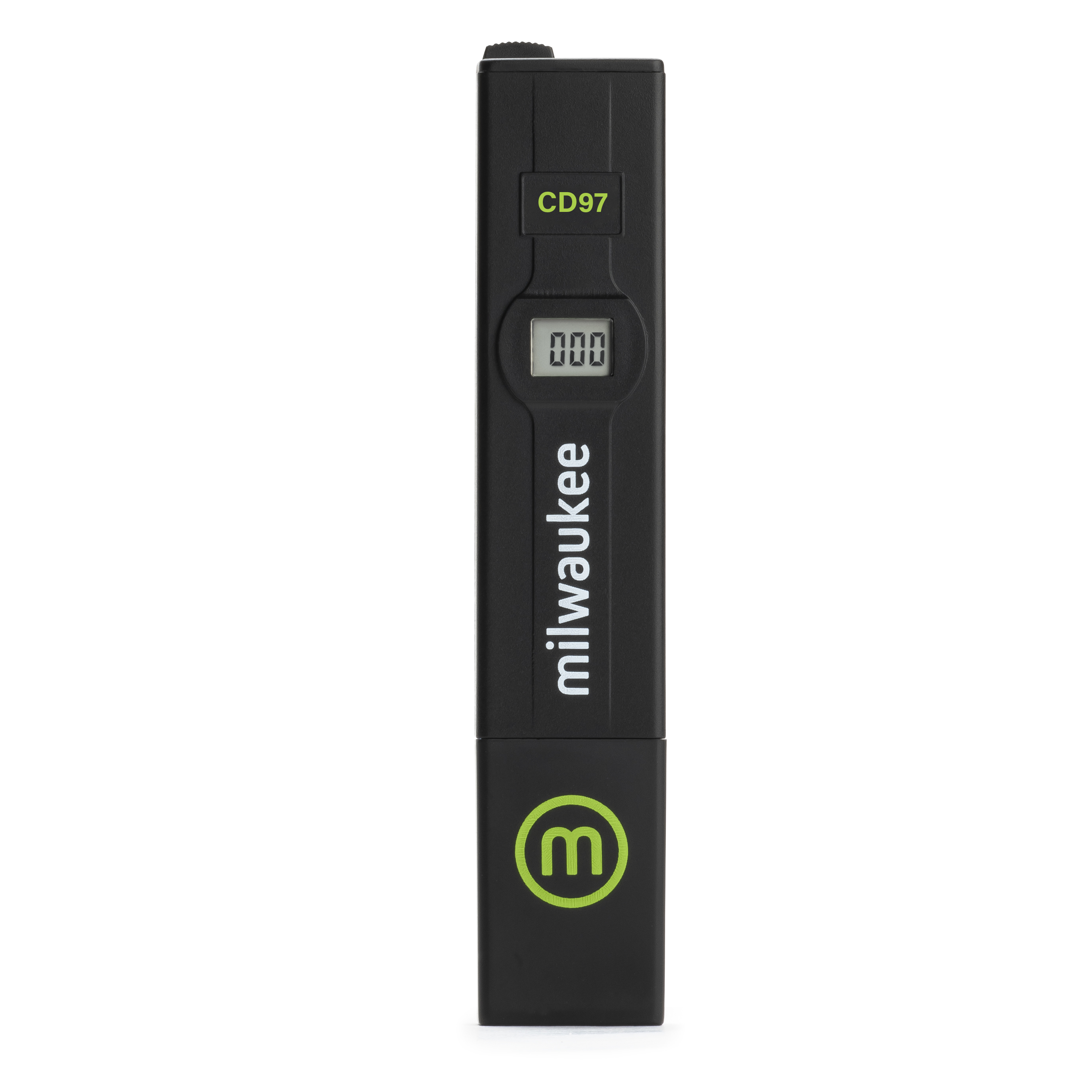
Frequently Asked Questions What does a TDS meter actually measure? A TDS meter measures the electrical conductivity of the water, which is caused by dissolved substances. This is used to calculate a value for the total amount of dissolved solids. It is important to note that the meter only indicates the quantity of dissolved substances, not their type or purity. A high TDS value therefore does not automatically mean that the water is contaminated or unhealthy – nor does a low value guarantee that the water is free from pollutants. Measurement range: 0 to 990 ppm (mg/l) What does TDS mean? What is ppm? TDS stands for Total Dissolved Solids – that is, the total amount of all dissolved solids in the water. These include minerals, salts, metals and organic substances dissolved in the water. The concentration of these dissolved substances is given in milligrams per litre (mg/L) or parts per million (ppm). Is it easy to use, even for beginners? Yes. Switch it on, dip it in the water and read the value straight away – no prior knowledge required. How accurate are the measurement results? For everyday use, the readings are reliable and provide a good indication of water quality. Can I use the tester when I’m out and about? Yes, the device is compact, lightweight and fits easily into any bag. Who would particularly benefit from buying this? Ideal for anyone who wants to check their water quality quickly and easily themselves.


Die MA9071 Elektrolytlösung ist speziell für gelöste-Sauerstoff-Sonden konzipiert. Sie sorgt für eine zuverlässige Funktion und exakte Messergebnisse.

This Nutrient Meter is designed for Hydroponics, horticulture and agriculture to help you make sure that your vegetables and plants are receiving the right amount of nutrient to promote healthy growth with low to zero product waste. Keep EC/TDS in your target range to help your achieve better results.- Readings are displayed with 20 LEDs graph bar- Range 0.2 to 4 mS/cm- The alarm feature is user settable and is displayed on the LED bar- No calibration required- Auto-ON/OFF function- The auto-check feature indicates the battery level- Waterproof and floating design makes the stick an appropriate tool for stirring nutrient solutions in a bucket/tank- Graphite EC probe with ATC

Waterproof multifunction meter for measuring conductivity, TDS, and temperature. Features automatic temperature compensation, a replaceable probe, and simple calibration for various applications. Milwaukee EC59 Waterproof Conductivity, TDS, and Temperature Meter – Precision and reliability for all water quality monitoring applications. The Milwaukee EC59 combines conductivity (EC), TDS, and temperature measurements into a single, compact handheld device. By integrating multiple measurement parameters, it is ideal for users who need to assess water quality quickly and easily without carrying multiple instruments. Automatic temperature compensation ensures reliable readings even when temperatures fluctuate. Additionally, automatic 1-point calibration allows for easy setup and regular accuracy checks, making the meter suitable for both beginners and experienced users. A key advantage of the EC59 is its replaceable electrode. The electrode can be swapped out if it wears down or performance declines, thereby extending the device's service life. Its robust, waterproof housing makes it a reliable tool for use in laboratories, greenhouses, or directly in the field. By simultaneously measuring conductivity, TDS, and temperature, the Milwaukee EC59 is suitable for a wide range of water quality monitoring and control applications. Technical Specifications Measurement parameters: Conductivity | TDS (Total Dissolved Solids) | Temperature Measurement range: 0 to 3999 µS/cm | 0 to 2000 ppm TDS | 0.0 to 60.0 °C (32.0 to 140.0 °F) Resolution: 1 µS/cm / 1 ppm / 0.1 °C / 0.1 °F Accuracy (EC/TDS/Temp.): 2% of full scale | +/-0.5 °C (+/-1 °F) Temperature compensation: Automatic Key benefits at a glance Measurement of conductivity, TDS, and temperature with a single device Waterproof housing for daily use Replaceable electrode for extended service life Compact and user-friendly design Ideal for portable and stationary measurements Typical applications Water treatment Aquaculture Hydroponics Laboratory applications Environmental analysis Frequently Asked Questions Can I use the device even if I have no prior knowledge? Yes, it is easy to use and the readings can be taken quickly. What can I actually measure with this tester? You can check the water quality based on conductivity, TDS value and temperature. Is the device suitable for outdoor use? Yes, the waterproof housing protects the device when used in damp environments. Will I need to replace the probe at some point? Yes, the probe is replaceable and can be replaced if necessary. How quickly do I get a measurement result? The measurement is taken within a few seconds of immersion in water. For which applications is the device particularly suitable? It is suitable for aquariums, hydroponics, swimming pools and many other water-related applications. Is the device compact enough for use on the go? Yes, thanks to its handy size, it fits easily into a bag or toolbox.

Waterproof multifunction meter for measuring conductivity, TDS, and temperature in high ranges. Features automatic temperature compensation, a replaceable probe, and a rugged design suitable for applications in aquaculture, industry, water treatment, and food production. Milwaukee EC60 waterproof high-range conductivity, TDS, and temperature meter – Reliable water quality monitoring – anywhere you need it The Milwaukee EC60 was developed for applications requiring reliable measurement of higher conductivity and TDS levels. This compact meter combines conductivity, total dissolved solids (TDS), and temperature measurements into a single device, making it suitable for a wide range of applications. Its extended measurement range makes the EC60 particularly well-suited for samples with high salt or mineral concentrations. Automatic temperature compensation accounts for temperature fluctuations during measurement, ensuring consistent results. Its rugged, waterproof design allows for both indoor and outdoor use. Automatic 1-point calibration ensures quick setup and easy maintenance. The replaceable probe further extends the meter's service life and helps reduce long-term costs. By simultaneously measuring conductivity, TDS, and temperature, the Milwaukee EC60 offers a practical solution for users who need to monitor multiple water parameters with a single device. Technical Specifications Measurement parameters: Conductivity (High range) | TDS (Total Dissolved Solids) | Temperature Measurement range: 0.00 to 20.00 mS/cm | 0.00 to 10.00 ppt (= 10,000 ppm) TDS | 0.0 to 60.0 °C Resolution: 0.01 mS/cm / 0.01 ppt / 0.1 °C / 0.1 °F Temperature compensation: Automatic Key benefits at a glance Designed for higher conductivity and TDS ranges Waterproof housing for daily use Automatic temperature compensation Replaceable probe for extended service life Compact and user-friendly design Typical applications Aquaculture and coral farming Beverage industry Food production Swimming pool technology Hydroponics Water treatment Frequently Asked Questions Can I check the water parameters on the spot? Yes, this compact device is ideal for quick measurements on the go. What water applications is the tester suitable for? It is suitable for aquariums, hydroponics, swimming pools and many other areas. Do I need to buy several devices for different measurements? No, the tester measures several key water parameters in a single device. It combines EC, TDS and temperature measurements in a waterproof unit and offers automatic temperature compensation. Measurement parameters: Conductivity (high range) | TDS (total dissolved solids) | Temperature Measuring range: 0.00 to 20.00 mS/cm | 0.00 to 10.00 ppt (= 10,000 ppm) TDS | 0.0 to 60.0 °C How easy is it to use on a daily basis? Measurements can be taken in just a few simple steps and the display is easy to read. What happens if the probe wears out? The probe can be replaced without having to replace the entire device. Is the device splash-proof? Yes, the waterproof housing is designed for damp working environments. How quickly do I see the measurement result? The values are shown on the display within a few seconds.

Frequently Asked Questions Why do I need a buffer or calibration solution? It allows you to set up your measuring device correctly and ensures reliable readings. How often should I calibrate my measuring device? That depends on how often you use it. If used frequently, regular calibration is recommended. Is the Milwaukee calibration solution also suitable for other measuring devices? In many cases, yes, provided the same measurement range is used. Can I use an opened solution more than once? Yes, as long as it remains clean and is stored correctly. How do I store buffer and calibration solutions correctly? It is best to store them in a cool, dry place and keep them tightly sealed. How do I know when I should recalibrate? If the readings seem unusual or change significantly.

Frequently Asked Questions Why do I need a buffer or calibration solution? It allows you to set up your measuring device correctly and ensures reliable readings. How often should I calibrate my measuring device? That depends on how often you use it. If used frequently, regular calibration is recommended. Is the Milwaukee calibration solution also suitable for other measuring devices? In many cases, yes, provided the same measurement range is used. Can I use an opened solution more than once? Yes, as long as it remains clean and is stored correctly. How do I store buffer and calibration solutions correctly? It is best to store them in a cool, dry place and keep them tightly sealed. How do I know when I should recalibrate? If the readings seem unusual or change significantly.

Frequently Asked Questions Why do I need a buffer or calibration solution? It allows you to set up your measuring device correctly and ensures reliable readings. How often should I calibrate my measuring device? That depends on how often you use it. If used frequently, regular calibration is recommended. Is the Milwaukee calibration solution also suitable for other measuring devices? In many cases, yes, provided the same measurement range is used. Can I use an opened solution more than once? Yes, as long as it remains clean and is stored correctly. How do I store buffer and calibration solutions correctly? It is best to store them in a cool, dry place and keep them tightly sealed. How do I know when I should recalibrate? If the readings seem unusual or change significantly.

Die M10016B Reinigungslösung von Milwaukee sorgt für eine gründliche Pflege von Elektroden. Jeder Beutel enthält 20 ml und bietet eine hygienische, frische Anwendung, um die Lebensdauer und Genauigkeit der Messgeräte zu erhalten.

Frequently Asked Questions Why do I need a buffer or calibration solution? It allows you to set up your measuring device correctly and ensures reliable readings. How often should I calibrate my measuring device? That depends on how often you use it. If used frequently, regular calibration is recommended. Is the Milwaukee calibration solution also suitable for other measuring devices? In many cases, yes, provided the same measurement range is used. Can I use an opened solution more than once? Yes, as long as it remains clean and is stored correctly. How do I store buffer and calibration solutions correctly? It is best to store them in a cool, dry place and keep them tightly sealed. How do I know when I should recalibrate? If the readings seem unusual or change significantly.

Frequently Asked Questions Why do I need a buffer or calibration solution? It allows you to set up your measuring device correctly and ensures reliable readings. How often should I calibrate my measuring device? That depends on how often you use it. If used frequently, regular calibration is recommended. Is the Milwaukee calibration solution also suitable for other measuring devices? In many cases, yes, provided the same measurement range is used. Can I use an opened solution more than once? Yes, as long as it remains clean and is stored correctly. How do I store buffer and calibration solutions correctly? It is best to store them in a cool, dry place and keep them tightly sealed. How do I know when I should recalibrate? If the readings seem unusual or change significantly.

Die M10032B ist eine präzise TDS-Kalibrierlösung (1382 ppm) im Einwegbeutel. Perfekt für portable und Laborgeräte, wenn eine schnelle und saubere Kalibrierung erforderlich ist. Häufige Fragen Wofür brauche ich eine Puffer- oder Kalibrierlösung? Damit stellen Sie Ihr Messgerät richtig ein und sorgen für verlässliche Messwerte. Wie oft sollte ich mein Messgerät kalibrieren? Das hängt von der Nutzung ab. Bei häufiger Nutzung empfiehlt sich eine regelmäßige Kalibrierung. Passt die Milwaukee Kalibrierlösung auch zu anderen Messgeräten? In vielen Fällen ja, wenn der gleiche Messbereich verwendet wird. Kann ich eine geöffnete Lösung mehrfach verwenden? Ja, solange sie sauber bleibt und korrekt gelagert wird. Wie lagere ich Puffer- und Kalibrierlösungen richtig? Am besten kühl, trocken und gut verschlossen lagern. Woran erkenne ich, dass ich neu kalibrieren sollte? Wenn Messwerte ungewöhnlich wirken oder diese sich deutlich verändern.