
Potassium Determination in Plant Tissue
Comparison of LAQUAtwin Potassium Ion Meter and ICP Spectrometry
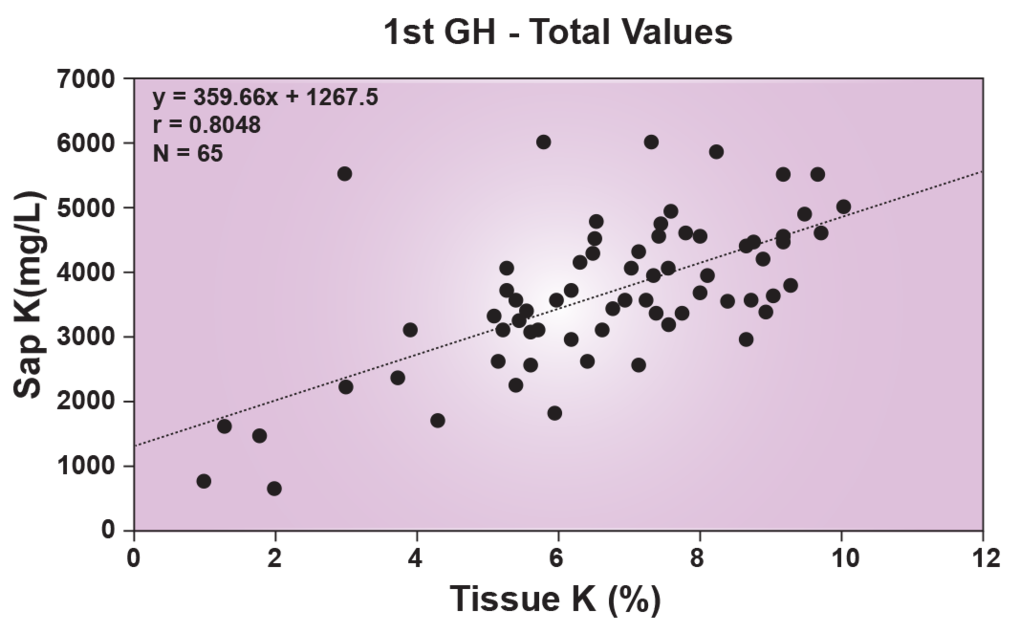
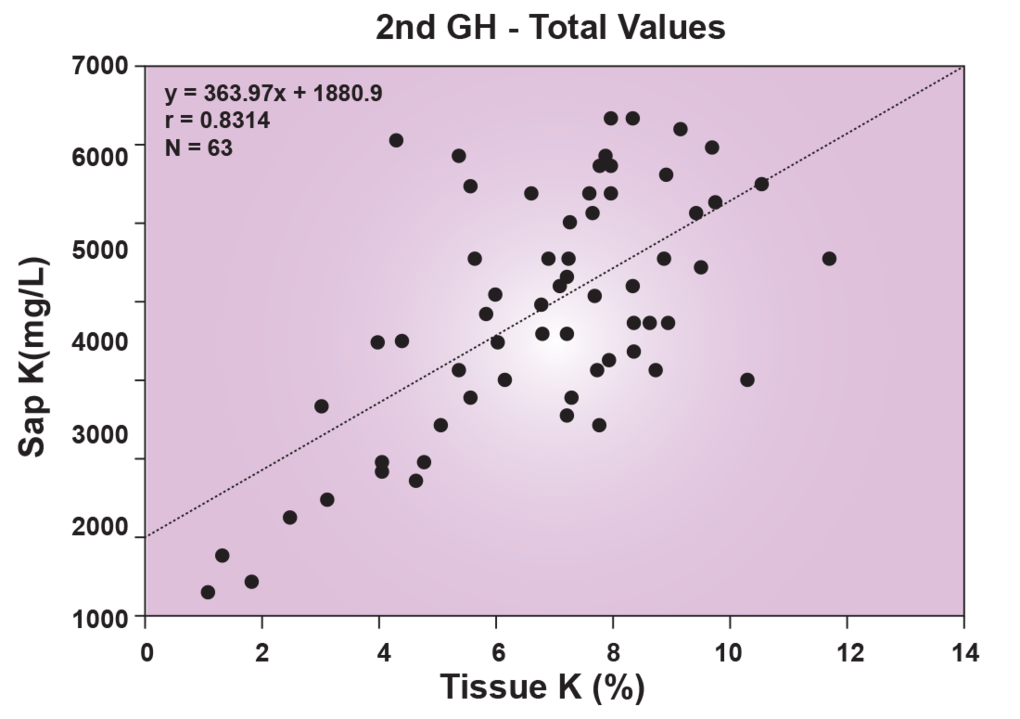
Trials revealed close significant correlation (r values were 0.80 and 0.93 for first trial and second trial, respectively) between the LAQUAtwin Potassium Ion meter readings and ICP results obtained from plant’s fresh petiole sap and dried tissue, respectively. This suggested that LAQUAtwin Potassium Ion meter could be an appealing field method substitute for rapid determination of potassium concentration in plant.



Introduction
Plant tissue analysis has been used for evaluating the nutritional status of vegetable crops. The conventional laboratory method for plant tissue analysis is Inductively Coupled Plasma (ICP) spectrometry, which requires a dried plant tissue to be subjected to either wet digestion or dry ashing prior to analysis. Among the recent techniques for nitrate-nitrogen (NO3-N) and potassium (K) management in vegetable crops has been the use of petiole sap analysis to determine supplemental fertilizer needs.
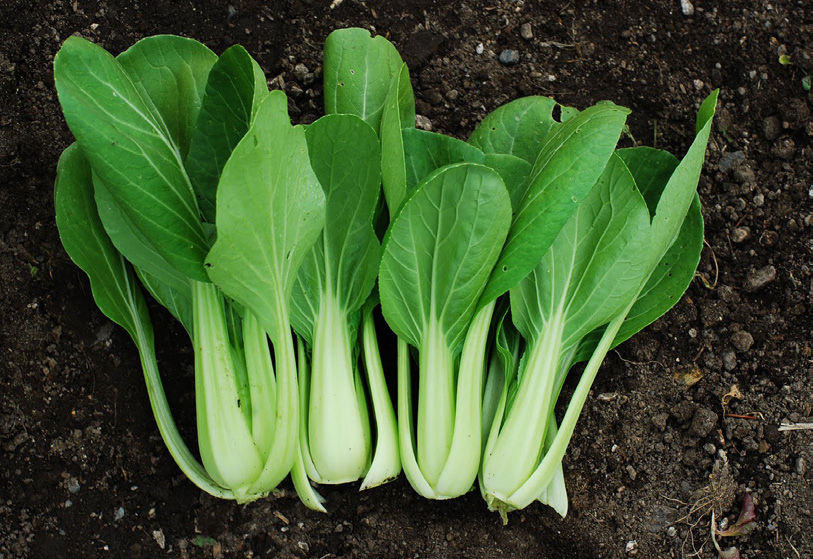
The LAQUAtwin Potassium Ion meter was used to measure K concentration in fresh petiole sap of pak choi (Brassica rapa, Chinensis group) plants, which were grown, applied with K and other nutrients, and harvested at University of Hawaii’s Magoon Research facility. The results were compared to K concentration in dried tissue of the same plant analysed by wet digestion and ICP.
The pocket-sized LAQUAtwin Potassium Ion meter is ideal for on-site testing as it provides quick result with just a few drops of sample that doesn’t require tedious preparation. It eliminates the need to transport samples to a laboratory for costly and time-consuming ICP spectrometry analysis.
Method
Sample Collection and Preparation
For LAQUAtwin Potassium Ion meter analysis, plant’s petioles were collected immediately after harvest at 5 weeks after emergence and fresh weights were recorded. Petioles were pressed in a garlic press to extract sap. One (1) ml of sap was diluted with deionized water to a volume of 5ml. After calibrating the LAQUAtwin Potassium Ion meter according to manufacturer’s instructions, few drops of the diluted sap were placed into the sensor of LAQUAtwin Potassium Ion meter to determine the potassium concentration.
For ICP spectrometry analysis, plants were placed in a conventional oven at 70°C and were dried for 72hrs. The dried weights were recorded. The dried samples were submitted to a laboratory for ICP spectrometry analysis to determine the potassium concentration.
Results and Benefits
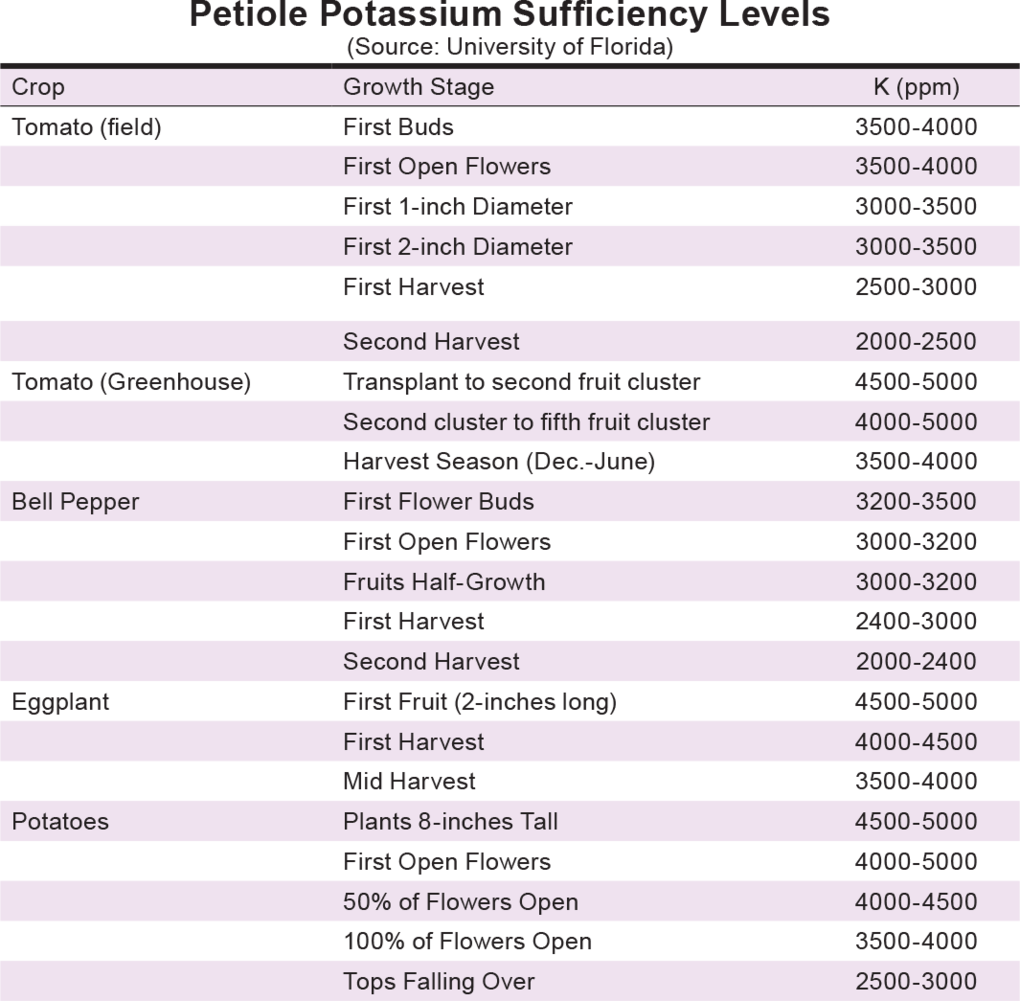
The K concentrations increased linearly in both the sap and dried tissue with increased amount of K applied (see figures 1 & 2) and the relationships were highly significant (P<0.0001). The correlation coefficient (r) was stronger between the LAQUAtwin Potassium Ion meter and ICP spectrometry results when totals of the replicates were used for correlation analysis – r values were 0.80 and 0.93 for first trial and second trial respectively. With these results, it was concluded that the LAQUAtwin Potassium Ion meter, which is easy to use and less expensive than standard laboratory analysis, is a valuable tool for onsite monitoring of plant’s K status. It was also concluded that 4500-5000 mg K/L for fresh petiole sap and 7.5% tissue are critical levels for K concentration in pak choi plant.
SUPPLEMENTARY INFORMATION
- Dilution – Undiluted sap can be analysed directly. However, sap for some crops has to be diluted to keep the determinations within the range of the calibrated standard curve. In another study conducted with LAQUAtwin Potassium Ion meter, it was found that sap diluted with water or 0.075M aluminum sulfate solution resulted in higher K recovery than undiluted one (Rosen et al). For testing sap diluted with 0.075M aluminum sulfate, 150ppm and 2000ppm K standard solutions with aluminum sulfate were prepared for calibration.
- Sap K Concentration - To determine K concentration of the undiluted sap, the meter reading obtained for the diluted sap should be multiplied by the dilution factor (final volume divided by original volume), which is ‘5’ in the method described above. Alternatively, set the meter coefficient to 5.00 (default value=1.00). This meter feature eliminates manual computation for diluted or even concentrated sample by using a coefficient that can be set from 0.01-9.90. Refer to the Multiplying Compensation Setting of the meter’s instruction manual.
References and Suggested Readings
- Chandrappa Gangaiah, Amjad A. Ahmad, Nguyen V. Hue, and Theodore J.K. Radovich. Comparison of potassium (K+) status in pak choi (Brassica rapa Chinensis group) using rapid cardy meter sap test and ICP spectrometry. The Food Provider. May 2015
- Carl J. Rosen, Mohamed Errebhi, and Wenshan Wang. Testing Petiole Sap for Nitrate and Potassium: A Comparison of Several Analytical Procedures. HORTSCIENCE 31(7):1173–1176.1996
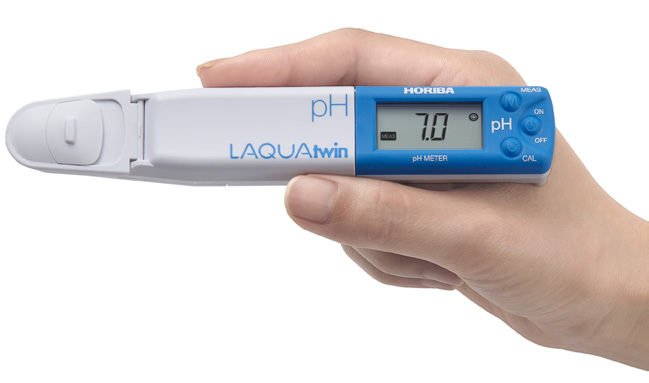
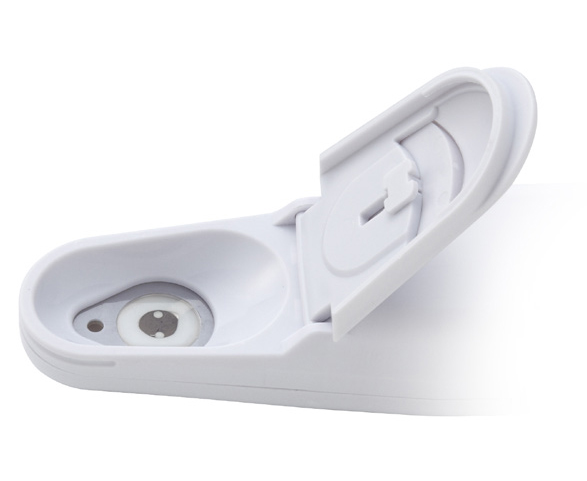
LAQUAtwin: the only meters with flat sensor technology.
HORIBA’s highly-sensitive, flat sensor technology opens up new possibilities for sampling and sample types. Only a small amount of sample is required, so you can easily sample in situ without the need for beakers or other labware. Sensors are easily replaced as required.
Calibrate and measure at the touch of a button — the smiley face will tell you when the result can be read.
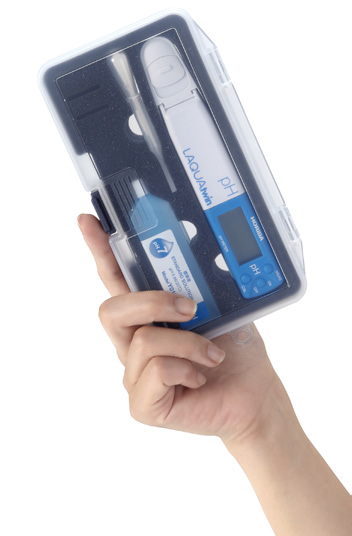
LAQUAtwin is fully waterproof and dustproof.
The meter and sensor are fully waterproof* and dustproof, so you can take it anywhere.
* IP67 rated. Will withstand immersion for 30 minutes at 1 m. Not suitable for underwater use.
Carry case comes as standard for handy portability.
The compact carry case contains everything you need for your measurements, including the standard solution and sampling sheets.
Matching products

Precise Potassium Ion Measurement on the Go – Mobile, Reliable, and Easy Precise potassium ion measurement with 2-point calibration and integrated temperature display The Horiba K-11 Potassium Pocket Tester was designed to determine potassium in a wide variety of samples with high precision. Thanks to the ion-selective electrode and the digital LCD screen with backlight, the tester is perfect for mobile water quality and environmental analyses. The minimal sample volume of only 0.3 ml (0.05 ml with sampling sheet) ensures reliable results even with small sample sizes. With its 2-point calibration and automatic standard recognition, the device can be flexibly adapted to different measurement conditions. The IP67 rating for dust and water protection, along with a long battery life of up to approximately 400 hours, makes the tester highly reliable for mobile use. Technical Features for Reproducible Potassium Measurements The potassium tester covers a wide measurement range from 4 to 9,900 ppm (mg/L) and additionally displays temperatures up to 50 °C with a resolution of 0.1 °C. The integrated temperature compensation ensures stable results even under changing environmental conditions. Automatic standard recognition, adjustable calibration values, and multiplication compensation guarantee high reproducibility across different sample types. This makes the K-11 suitable for both routine and demanding analytical tasks. Why Potassium Measurement Is Important – Ideal with the Horiba K-11 Hand Tester Potassium is an essential parameter in water, environmental, agricultural, and food analysis. In water bodies, potassium content affects water quality, in soils it is a key nutrient for healthy plant growth, and in food it plays an important role for nutrition and labeling requirements. A mobile potassium hand tester enables rapid on-site analysis without time-consuming laboratory testing. Changes can be detected immediately, and decisions can be made right away. The Horiba K-11 combines this flexibility with high measurement accuracy and ease of use – ideal for fieldwork, routine checks, and scientific studies. Where Can It Be Used? Environmental Monitoring: The K-11 is a fast and precise measurement tool for environmental technicians and scientists monitoring potassium concentrations in water bodies to ensure water quality and identify contamination sources. Agriculture: The K-11 allows farmers and agronomists to measure potassium in soil. This is crucial for fertilizer application and improving plant growth. Easy evaluation of soil extracts enables precise nutrient requirement determination. Food Industry: The tester is used by quality assurance personnel to check potassium content in beverages and food. These measurements are important for product development, health assessments, and compliance with nutritional labeling requirements. Teaching, Research, and Development: By deepening the understanding of potassium’s role in biological and chemical processes, the K-11 serves researchers and educators as a useful tool for experimental studies and educational purposes. Additional information We would like to inform you of an upcoming product update for the LAQUAtwin handheld analysers. To enhance product safety and prevent infants and young children from accidentally swallowing the batteries, HORIBA will be introducing a new battery cover on all LAQUAtwin pocket-sized analysers. Overview of the product change Change: Battery cover for enhanced safety. Reason: To prevent accidental swallowing of batteries. Production date: From January 2026 in Japan Deliveries to EMEA distribution partners: From March 2026 As this change is currently being rolled out, mixed deliveries of the current and updated versions may occur during the transition period. Frequently asked questions How long is the warranty period for HORIBA pocket testers? The warranty period is two years from delivery for commercial customers. How many measurements can be taken before the sensor needs to be replaced? This varies depending on the application, use and storage of the Horiba tester. As a rule, the sensor should be replaced after one year. How long is the warranty period for replacement sensors for pocket testers? The warranty period is 12 months after delivery for commercial customers. How do you clean the pocket tester? The pocket tester can be rinsed under water. We recommend cleaning with DI water (deionised). Tissue paper is recommended for drying after cleaning. How can the pocket tester be reset to factory settings? (e.g. in the event of an incorrect measurement result) This information can be found in the operating instructions. These can be found in the download area of the shop and on the product. Is calibration necessary before each measurement? Basically, yes. Further information can be found in the operating instructions.
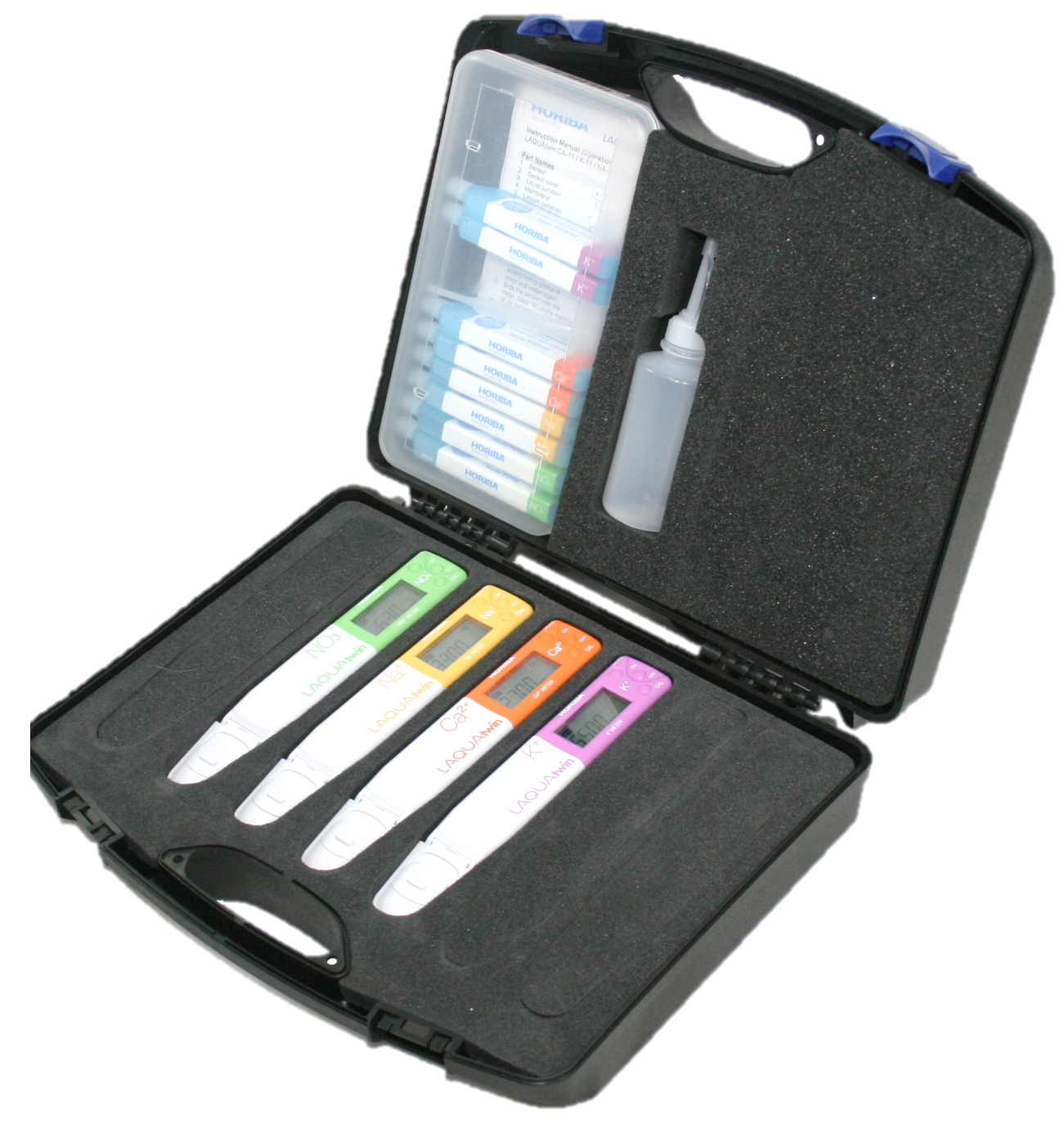
Mobile Analysis Laboratory for Ion Measurements – Versatile Use Compact kit for simultaneous determination of multiple water and environmental parameters The Horiba 4M LAQUAtwin Kit is a mobile laboratory that allows you to determine important ion parameters directly on-site. The case contains pocket testers for measuring sodium, potassium, nitrate, and calcium, as well as for temperature measurement. Each device uses ion-selective electrodes for targeted analysis of small samples and provides fast, reliable results. In addition to the four measurement devices, the kit includes calibration solutions and a wash/spray bottle for sensor cleaning. The sensors can be stored dry without special storage solutions. Compact Multi-Parameter Kit for Flexible On-Site Analyses The set is designed for measurement tasks where multiple ions need to be detected simultaneously, for example when monitoring drinking and process water, performing environmental checks of water bodies, conducting aquaculture analyses, or agricultural research. Thanks to the case, all essential testers including accessories are always on hand and ready for immediate use. The measurement results are available in a short time and are reliable and reproducible – ideal for routine and control measurements in the field. All components are neatly arranged in the case and ready for use at any time. An additional advantage is that the sensors can be stored dry without special storage solutions. Due to its compact design, the kit is particularly suitable for mobile applications where multiple ion parameters need to be determined quickly one after the other or in parallel. Why Multi-Parameter Ion Measurements Are Useful – and a Mobile Kit Is Ideal In many applications, not just a single measurement is important, but the interaction of multiple ion parameters. Sodium, potassium, nitrate, and calcium together influence water quality, biological processes, plant growth, and technical operations. Single measurements in a laboratory are often time-consuming and inflexible. A mobile analysis kit allows simultaneous detection of multiple parameters directly on-site. This allows relationships to be recognized more quickly, decisions to be made more reliably, and measurement campaigns to be carried out more efficiently. The Horiba 4M LAQUAtwin Kit combines these advantages in a compact, user-friendly system. Additional information We would like to inform you of an upcoming product update for the LAQUAtwin handheld analysers. To enhance product safety and prevent infants and young children from accidentally swallowing the batteries, HORIBA will be introducing a new battery cover on all LAQUAtwin pocket-sized analysers. Overview of the product change Change: Battery cover for enhanced safety. Reason: To prevent accidental swallowing of batteries. Production date: From January 2026 in Japan Deliveries to EMEA distribution partners: From March 2026 As this change is currently being rolled out, mixed deliveries of the current and updated versions may occur during the transition period. Frequently asked questions How long is the warranty period for HORIBA pocket testers? The warranty period is two years from delivery for commercial customers. How many measurements can be taken before the sensor needs to be replaced? This varies depending on the application, use and storage of the Horiba tester. As a rule, the sensor should be replaced after one year. How long is the warranty period for replacement sensors for pocket testers? The warranty period is 12 months after delivery for commercial customers. How do you clean the pocket tester? The pocket tester can be rinsed under water. We recommend cleaning with DI water (deionised). Tissue paper is recommended for drying after cleaning. How can the pocket tester be reset to factory settings? (e.g. in the event of an incorrect measurement result) This information can be found in the operating instructions. These can be found in the download area of the shop and on the product. Is calibration necessary before each measurement? Basically, yes. Further information can be found in the operating instructions.