
Dissolved Oxygen in the Greenhouse
Greenhouse crops perform better with higher levels of dissolved oxygen in the irrigation water. While above 5 mg/L of dissolved oxygen is considered marginally acceptable for plant growth, greater than 8 mg/L is considered as healthy. However, it is a common problem in greenhouses for DO levels in the irrigation feed to fall to hypoxic (< 4 mg/L) levels. It is hence important for growers to monitor and ensure that DO levels are optimal for plant growth.


Introduction
Dissolved oxygen refers to the gaseous oxygen dissolved in water. The concentration of dissolved oxygen is crucial to aquatic organisms as they depend on dissolved oxygen for respiration. Despite being producers of oxygen, plants require oxygen to live as well. Ensuring sufficient levels of dissolved oxygen in the irrigation water improves a plant’s overall health. An elevated level of dissolved oxygen leads to increased nutrient uptake and conversion efficiency, in turn enhancing the growth and development of roots, vegetative, and flowering characteristics. Increasing the levels of dissolved oxygen in irrigation water also improves the resistance of plants to stress caused by adverse conditions, in turn reducing the threat of various opportunistic pathogens.
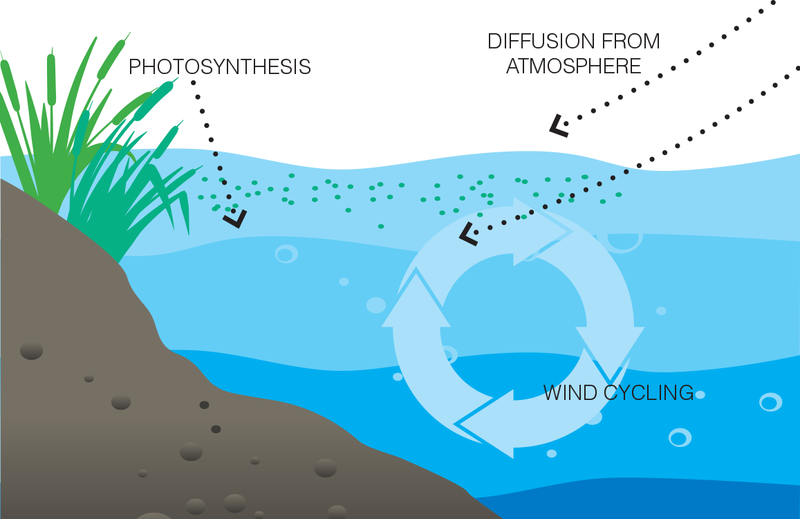
Dissolved oxygen can enter bodies of water naturally, typically at the water surface where atmospheric oxygen establishes an equilibrium with the water. In larger bodies of water in nature, waves and wind help increase surface exposure, increasing surface exposure and allowing more oxygen exchange and dissolution. When water holds as many dissolved gas molecules as it can, this is known as 100% saturation. It is possible for saturation to exceed 100%, and this is known as super-saturation. Dissolved oxygen sensors measure concentration as a percentage of saturation (%), in milligrams per liter (mg/L), or in parts per million (ppm). The amount of oxygen that can dissolve in water is affected by the temperature and salinity of water – amount of oxygen dissolved in water decreases as temperature and salinity increases.
Optimal levels of dissolved oxygen
In the greenhouse, there are many challenges in ensuring that the dissolved oxygen in irrigation water is sufficiently high, due to competition for dissolved oxygen from biological oxygen demands (BOD) in the irrigation channels and piping. Irrigation water is typically considered marginally acceptable for plant health at DO levels above 5 mg/L. Most greenhouse crops will perform better with higher DO levels, with levels greater than 8mg/L generally being considered as good for greenhouse production. Research has also found that having a high concentrated dissolved oxygen (20-30 mg/L) supply was effective in improving plant growth under a low greenhouse temperature in a deep hydroponic culture. However, if dissolved oxygen levels drop below 4 mg/L, the water is considered to be hypoxic which is detrimental to plants. Dissolved oxygen levels below 0.5 mg/L is considered to be anoxic and does not support plant or animal life. Many greenhouses face the problem of having dissolved oxygen levels in irrigation water falling in the hypoxic range. It is the grower’s responsibility to monitor dissolved oxygen levels and take appropriate measures to ensure healthy crop growth.
Dissolved Oxygen monitoring equipment
HORIBA’s Dissolved Oxygen (DO) electrodes are galvanic probes with integrated temperature sensors. With galvanic probes, calibration can be performed immediately in air. This is because galvanic sensors are self-polarizing due to the electrode potential generated by the use of dissimilar metals. Horiba’s dissolved oxygen probes use unique and innovative tips which are replaceable, comprising of an anode and cathode confined in electrolyte solution by an oxygen permeable membrane. Dissolved oxygen molecules diffuse through the membrane to the sensor at a rate proportionate to the pressure difference across it. There are two models available, the 9551-20D and 9551-100D, one having a cable length of 2m and the other having a cable length of 10m. These DO probes can be equipped on a suitable meter such as the LAQUAact DO 110 and DO 120 handheld meters for dissolved oxygen, or the LAQUAact PD 110 handheld meters for multi-parameter analysis.
Method
Calibrate the Horiba LAQUAact DO110/120 or PD110 handheld meter with the 9551-20/100D dissolved oxygen electrode connected. The dissolved oxygen galvanic probe can be calibrated either in air or in standard solution. In most cases, a one point air calibration will suffice.
Procedures for air calibration
- Remove any drops of liquids from the membrane at the end of the DO tip by wiping with soft tissue paper or similar material to dry it.
- Avoid calibrating in places with extreme temperature fluctuations, places exposed to the wind or rain, and places near heating equipment.
- Do not grasp the holder during or immediately before/after calibration, as body temperature adversely affects the stability of the readings. The temperatures of the DO electrode and the air is important in achieving proper air-calibration.
- It is important for the temperature of the DO probe has to be equalized with the surrounding air to achieve proper air-calibration. If possible, allow the DO electrode to sit in the open air for approximately 20 minutes prior to calibration.
Standard solution calibration and sample measurement
- Wash the electrode with tap water and dry it with filter or tissue paper, each time prior to immersing it in the solution.
- When immersing the electrode in the solution, be sure that the temperature sensor is completely immersed.
- Stir the DO electrode around in the solution, so that the temperature of the electrode becomes the same as that of the solution.
- Ensure that the membrane has no dirt or air bubbles on it.
- Measure the DO of the solution, making sure the flow speed on the surface of the membrane is constant. Move the electrode up and down at a speed of approximately 20 cm/s to 30 cm/s.
References And Suggested Readings
- Dramm.com. (2014). Dissolved Oxygen in the Greenhouse. [online] Available at: www.dramm.com/media/Dissolved%20Oxygen%20in%20the%20Greenhouse.pdf [Accessed 14 Jan. 2019].
- Suyantohadi, A., Kyoren, T., Hariadi, M., Purnomo, M. and Morimoto, T. (2010). Effect of high consentrated dissolved oxygen on the plant growth in a deep hydroponic culture under a low temperature. IFAC Proceedings Volumes, 43(26), pp.251-255.
LAQUAtwin: the only meters with flat sensor technology.
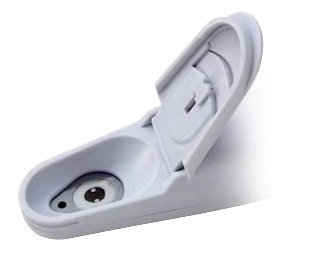
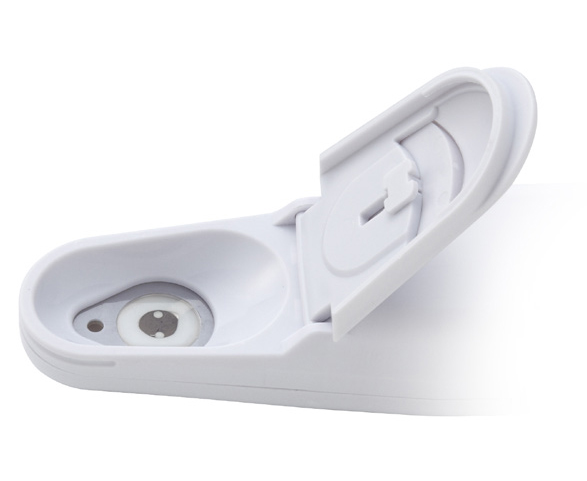
HORIBA’s highly-sensitive, flat sensor technology opens up new possibilities for sampling and sample types. Only a small amount of sample is required, so you can easily sample in situ without the need for beakers or other labware. Sensors are easily replaced as required.
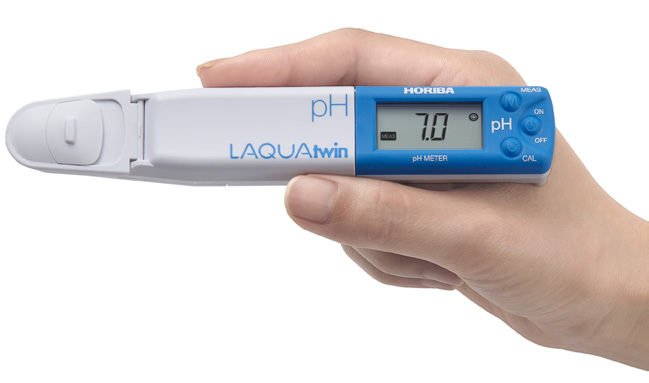
Calibrate and measure at the touch of a button — the smiley face will tell you when the result can be read.
LAQUAtwin is fully waterproof and dustproof.
The meter and sensor are fully waterproof* and dustproof, so you can take it anywhere.
* IP67 rated. Will withstand immersion for 30 minutes at 1 m. Not suitable for underwater use.
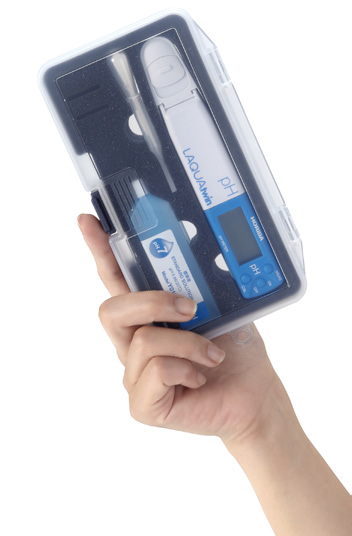
Carry case comes as standard for handy portability.
The compact carry case contains everything you need for your measurements, including the standard solution and sampling sheets.
Matching products

HORIBA pH Handheld Tester – Ideal for Water and Environmental Analysis Precise pH measurements on-site – compact, reliable, and easy to use The Horiba LAQUAtwin pH tester is ideal for water quality testing in rivers, drinking water, and process water. With a measurement range of 0.0 to 14.0 pH and a 2-point calibration, the tester is suitable for a wide range of pH analyses. Just a single drop of sample provides quick and reliable measurement results. The tester combines electrode, display, and sample container in a robust IP67-rated housing that is dust- and waterproof. The digital display with backlight shows both pH and mV values. Features such as automatic stability detection and Auto-Hold simplify operation. With up to 400 hours of battery life, the tester is suitable for extended measurement series. Included are calibration buffer solutions (pH 4.01 & 7.00), batteries, pipette, instruction manual, and a carrying case. Handheld pH tester for fast and precise results With its wide measurement range and 2-point calibration, the Horiba LAQUAtwin pH tester is suitable for a variety of pH analyses. Even a single drop of sample is enough to obtain fast and accurate results. Its compact design makes the mobile pH tester highly user-friendly and allows on-site measurements without complex sample preparation or laboratory infrastructure. Robust, waterproof design with comprehensive features The tester integrates the electrode, display, and sample container in a robust IP67-rated housing that is dust- and waterproof. The digital backlit display clearly shows pH and mV values. Features like automatic stability detection and Auto-Hold simplify daily use. With a battery life of up to 400 hours, the tester is suitable for long measurement series. The package includes calibration buffer solutions (pH 4.01 & 7.00), batteries, pipette, instruction manual, and a practical carrying case. Typical applications of the Horiba LAQUAtwin pH Pocket Tester Aquaculture and corals Aquariums Beer, beverages, and food Heating systems Laboratories and schools Horticulture Water treatment Additional information We would like to inform you of an upcoming product update for the LAQUAtwin handheld analysers. To enhance product safety and prevent infants and young children from accidentally swallowing the batteries, HORIBA will be introducing a new battery cover on all LAQUAtwin pocket-sized analysers. Overview of the product change Change: Battery cover for enhanced safety. Reason: To prevent accidental swallowing of batteries. Production date: From January 2026 in Japan Deliveries to EMEA distribution partners: From March 2026 As this change is currently being rolled out, mixed deliveries of the current and updated versions may occur during the transition period. Frequently asked questions How long is the warranty period for HORIBA pocket testers? The warranty period is two years from delivery for commercial customers. How many measurements can be taken before the sensor needs to be replaced? This varies depending on the application, use and storage of the Horiba tester. As a rule, the sensor should be replaced after one year. How long is the warranty period for replacement sensors for pocket testers? The warranty period is 12 months after delivery for commercial customers. How do you clean the pocket tester? The pocket tester can be rinsed under water. We recommend cleaning with DI water (deionised). Tissue paper is recommended for drying after cleaning. How can the pocket tester be reset to factory settings? (e.g. in the event of an incorrect measurement result) This information can be found in the operating instructions. These can be found in the download area of the shop and on the product. Is calibration necessary before each measurement? Basically, yes. Further information can be found in the operating instructions.

Mobile pH Tester with 3-Point Calibration for On-the-Go Use Horiba LAQUAtwin pH Tester – ideal for water and environmental analysis The Horiba LAQUAtwin pH Tester pH-22 is compact, robust, and designed for mobile use. With up to three calibration points and a measurement range of 0.00 to 14.00 pH, this device delivers high precision and reliability. Direct measurement with just a single drop of sample provides fast results. Features such as automatic buffer recognition, temperature compensation, and Stabil/Hold functionality make daily operation simple and convenient. Mobile precision pH tester for reliable on-site measurements The tester combines electrode, display, and sample container in a dust- and waterproof IP67 housing, making it ideal for field and laboratory applications. The digital backlit display shows pH and mV values clearly and accurately. Automatic shut-off and battery status indicators ensure convenient operation. The package includes calibration buffer solutions (pH 4.01 and 7.00), batteries, a pipette, and a quick-start guide. Why accurate pH measurement is critical – and why a handheld tester is ideal pH is a key parameter in water, environmental, and process analysis because it significantly influences chemical reactions, biological processes, and material stability. Even small deviations can substantially impact water quality, product quality, or process safety. A mobile handheld pH tester allows fast, reliable measurements directly on site. Changes can be detected immediately, and corrective actions implemented without delay. The Horiba LAQUAtwin pH-22 combines this flexibility with high measurement precision, making it ideal for field, laboratory, and routine applications. Typical applications for the Horiba LAQUAtwin pH handheld tester Aquaculture and coral monitoring Beer, beverage, and food production Heating systems Laboratories and schools Environmental analysis Water treatment Horticulture Additional information We would like to inform you of an upcoming product update for the LAQUAtwin handheld analysers. To enhance product safety and prevent infants and young children from accidentally swallowing the batteries, HORIBA will be introducing a new battery cover on all LAQUAtwin pocket-sized analysers. Overview of the product change Change: Battery cover for enhanced safety. Reason: To prevent accidental swallowing of batteries. Production date: From January 2026 in Japan Deliveries to EMEA distribution partners: From March 2026 As this change is currently being rolled out, mixed deliveries of the current and updated versions may occur during the transition period. Frequently asked questions How long is the warranty period for HORIBA pocket testers? The warranty period is two years from delivery for commercial customers. How many measurements can be taken before the sensor needs to be replaced? This varies depending on the application, use and storage of the Horiba tester. As a rule, the sensor should be replaced after one year. How long is the warranty period for replacement sensors for pocket testers? The warranty period is 12 months after delivery for commercial customers. How do you clean the pocket tester? The pocket tester can be rinsed under water. We recommend cleaning with DI water (deionised). Tissue paper is recommended for drying after cleaning. How can the pocket tester be reset to factory settings? (e.g. in the event of an incorrect measurement result) This information can be found in the operating instructions. These can be found in the download area of the shop and on the product. Is calibration necessary before each measurement? Basically, yes. Further information can be found in the operating instructions.

Manufacturer Part No. 3999960124 LAQUAtwin PH-33: The world's first pocket-sized PH meter Your mobile laboratory - for use on site: Ideal for water quality testing in aquatic, drinking and process water and many other applications. HORIBA's unique compact meter integrates electrode, display and sample container to enable simple, effective on-site testing by direct measurement with a single drop. Minimum sample volume: 0.1 ml (0.05 ml with sampling sheet B) Up to 5 calibration points pH, mV and temperature display Automatic calibration Automatic buffer recognition: USA & NIST pH buffers Automatic temperature compensation Temperature calibration: 5 to 40.0 ºC Automatic stable / automatic hold measurement Automatic switch off: 30 min. Low battery indicator IP67 rating dust and waterproof Replaceable sensor 400 hours battery life: continuous operation without backlight Material: ABS epoxy Display: customised (monochrome) LCD with backlight Operating conditions: 5 to 40°C, 85% or less relative humidity Warranty: 2 years - meter, 6 months - sensor Packed in a practical carrying case Supplied with pH 4.01 & 7.00 buffers (14ml each), 2 x CR2032 batteries, dropper, instructions and quick reference guide Additional information We would like to inform you of an upcoming product update for the LAQUAtwin handheld analysers. To enhance product safety and prevent infants and young children from accidentally swallowing the batteries, HORIBA will be introducing a new battery cover on all LAQUAtwin pocket-sized analysers. Overview of the product change Change: Battery cover for enhanced safety. Reason: To prevent accidental swallowing of batteries. Production date: From January 2026 in Japan Deliveries to EMEA distribution partners: From March 2026 As this change is currently being rolled out, mixed deliveries of the current and updated versions may occur during the transition period.